 en
 English
 русский
 Français
 عربى


Prefabricated Modular Mobile Toilets: Advanced Off-Grid Sanitation for Remote and High-Demand Applications
Content
- Why Prefabricated Modular Mobile Toilets Are Becoming Essential
- Complete Product Concept and Modular Configuration
- Integrated Sewage Treatment for Remote Locations
- Closed-Loop Water Recycling and Water Conservation
- Smart Unattended Operation
- Factory-Built Structural Quality
- Advanced Manufacturing Capabilities
- Advantages Compared with Conventional Temporary Toilets
- Custom Layouts for Different Users and Applications
- Applications in Remote and Demanding Environments
- System Components and User Comfort
- Production Process and Quality Control
- Installation, Commissioning, and Maintenance
- Environmental and Economic Benefits
- Choosing the Right Configuration
- Comparison of Available Product Categories
- Why Manufacturer Experience Matters
- Frequently Asked Questions
- Q1: What is a prefabricated modular mobile toilet?
- Q2: Can the unit operate without a municipal sewer connection?
- Q3: How does the water recycling system work?
- Q4: What is the standard size?
- Q5: Can Western toilets and squatting pans both be provided?
- Q6: Is the modular toilet suitable for unattended operation?
- Q7: How long does production take?
- Q8: Can the toilet be used in deserts or high-UV environments?
- Q9: What maintenance does the system require?
- Q10: What is the expected service life?
- Q11: Can the unit be connected to solar power?
- Q12: What information should a buyer provide for a quotation?
- Conclusion
- References
- Product: Prefabricated Modular Mobile Toilets
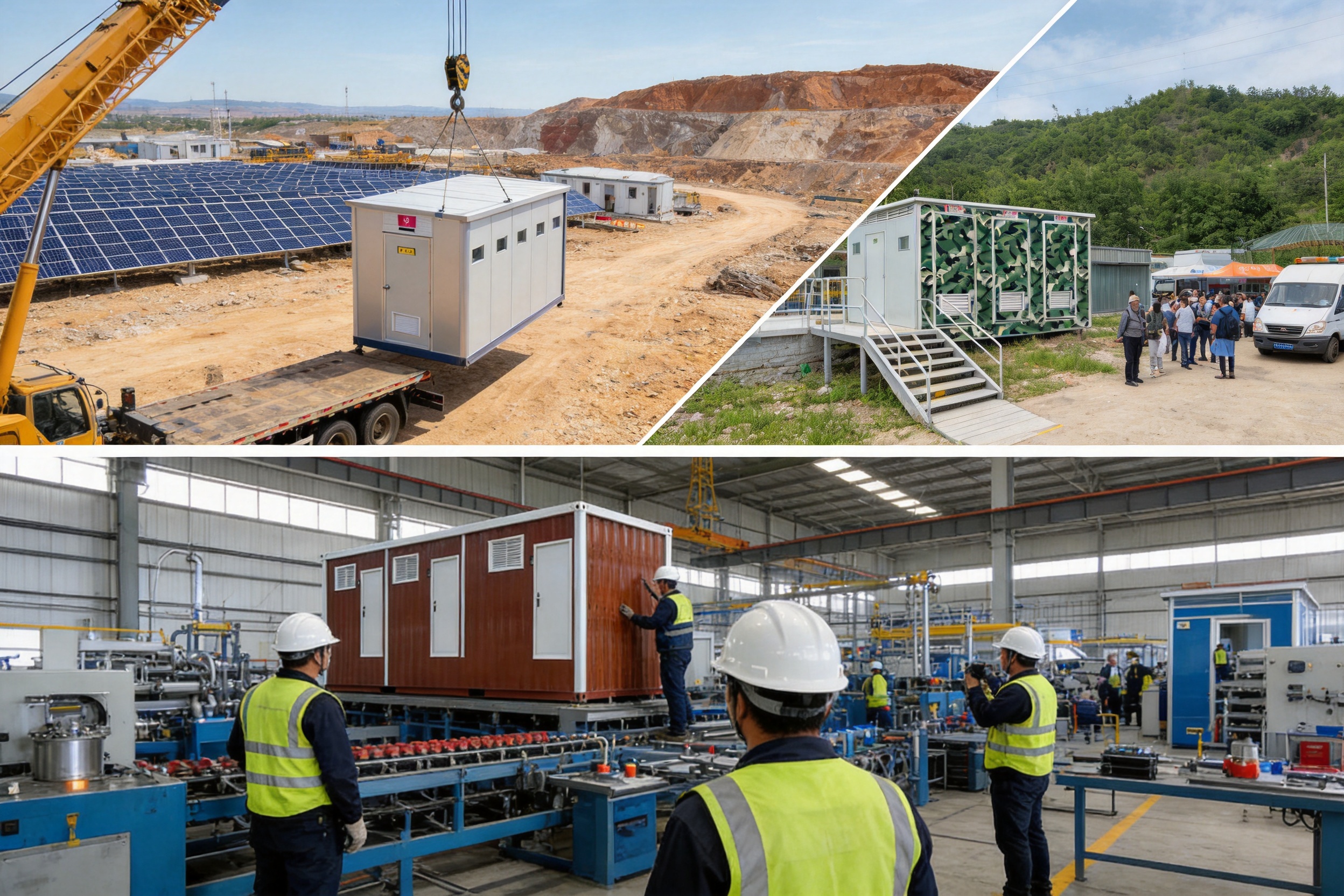
Prefabricated modular mobile toilets are transforming the way sanitation facilities are designed, manufactured, deployed, and operated. Unlike conventional temporary toilets that depend on frequent waste removal, external sewer connections, or large quantities of fresh water, modern modular mobile toilets can incorporate integrated sewage treatment, water recycling, automated controls, ventilation, lighting, and complete restroom fixtures within a factory-built structure.
The ST-PTL modular unattended toilet unit is designed as a complete sanitation solution for remote areas, construction projects, mining camps, emergency response locations, tourism facilities, public events, and other sites where permanent municipal infrastructure is unavailable or impractical. Its integrated sewage treatment system processes wastewater within the unit, while the treated water can be recycled for toilet flushing. This closed-loop approach reduces sewage discharge, conserves water, and lowers the logistical burden associated with operating sanitation facilities in isolated locations.
Manufactured by Suzhou Shengtu Integrated Housing Co., Ltd., the unit combines the company’s experience in prefabricated modular construction, steel structure fabrication, color steel panel production, and integrated housing engineering. The result is a movable, weather-resistant, customizable, and factory-prepared toilet facility that can be delivered and installed with limited site work.
Why Prefabricated Modular Mobile Toilets Are Becoming Essential
Sanitation infrastructure is often one of the most difficult services to provide in remote and temporary environments. Conventional restroom construction requires foundations, plumbing networks, sewage pipelines, water connections, electrical installation, and lengthy civil engineering work. These requirements can make permanent construction expensive and slow, particularly in deserts, mountainous areas, disaster zones, temporary camps, and rapidly developing project sites.
Traditional portable toilets provide mobility, but many basic models offer limited user comfort and rely on holding tanks or regular pumping services. In locations with poor road access, long distances, extreme weather, or strict environmental requirements, waste collection can become expensive and unreliable. Odor control, hygiene, water supply, and wastewater disposal may also become ongoing operational concerns.
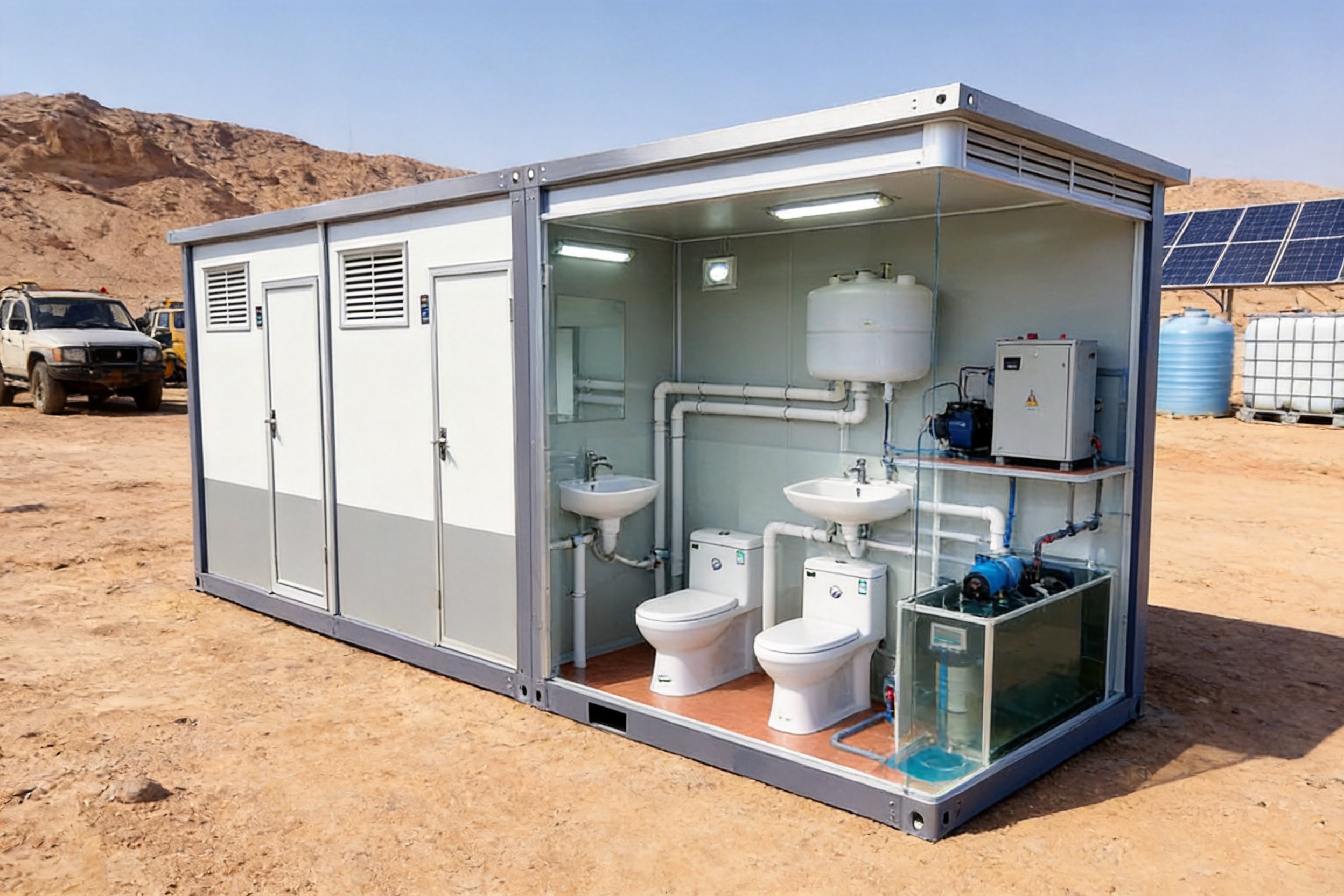
Prefabricated modular mobile toilets address these challenges by bringing multiple systems together in one engineered structure. A complete unit can include toilet compartments, washbasins, water supply piping, ventilation, lighting, sewage treatment equipment, water recycling equipment, an electrical control cabinet, and service access areas. Most components are installed and tested in the factory before delivery, reducing the amount of work required at the destination.
This approach offers several important advantages. The unit can be deployed quickly, relocated when project needs change, adapted to different climates, and configured for different user groups. It can also be connected to external utilities when they are available or designed for a higher degree of self-sufficiency when they are not.
Complete Product Concept and Modular Configuration
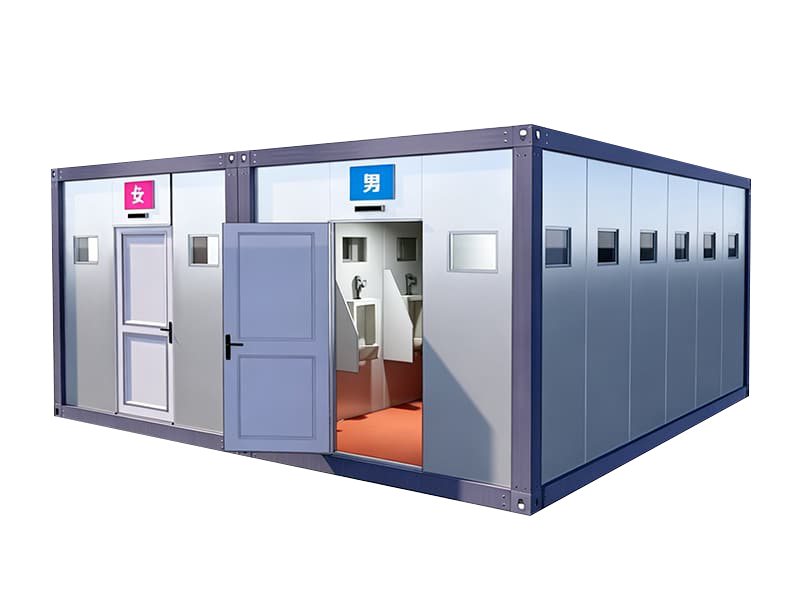
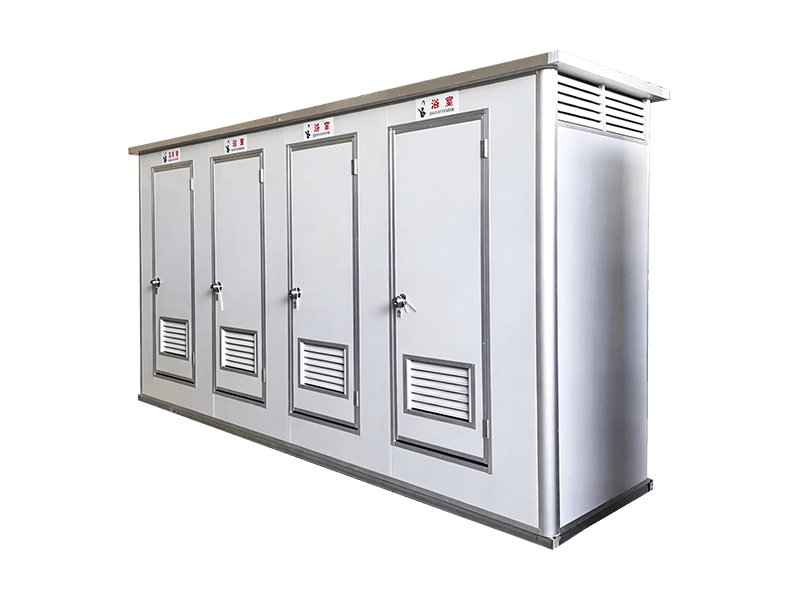
The ST-PTL is more than a standalone toilet cabin. It is a modular sanitation building with three closely coordinated functional areas: the public restroom area, the integrated sewage treatment area, and the equipment control area. This arrangement allows the unit to provide a complete operational solution while maintaining a compact footprint.
The restroom area can be configured with Western-style toilets, squatting pans, washbasins, handwashing fixtures, ventilation equipment, and other supporting facilities. Depending on the project, the layout may include separate compartments, male and female sections, shower facilities, accessible toilets, family rooms, or other custom arrangements.
The treatment section is designed to receive and process wastewater within the unit. Depending on the selected configuration, treatment can use biological, chemical, membrane, ozone, or combined treatment technologies. The system can be adapted according to expected user numbers, operating duration, local environmental requirements, and the desired quality of treated water.
The equipment control room protects key electrical and treatment components while providing an organized location for control panels, pumps, monitoring devices, and maintenance access. Separating technical equipment from the user area improves safety, simplifies servicing, and helps preserve a clean and comfortable restroom environment.
The modular building format also makes transportation and installation more convenient. The unit is factory assembled as far as practical, transported to the project site, positioned on a prepared base, and connected to the required power, water, drainage, or communication services. For off-grid applications, solar power compatibility, water storage, and remote monitoring can be incorporated according to project requirements.
Prefabricated Modular Mobile Toilets
Integrated Sewage Treatment for Remote Locations
The central advantage of the modular mobile toilet is its ability to treat wastewater near the point of use. Instead of sending untreated sewage through a long external pipeline or storing all waste in a tank for periodic removal, the integrated treatment system processes wastewater within the prefabricated unit.
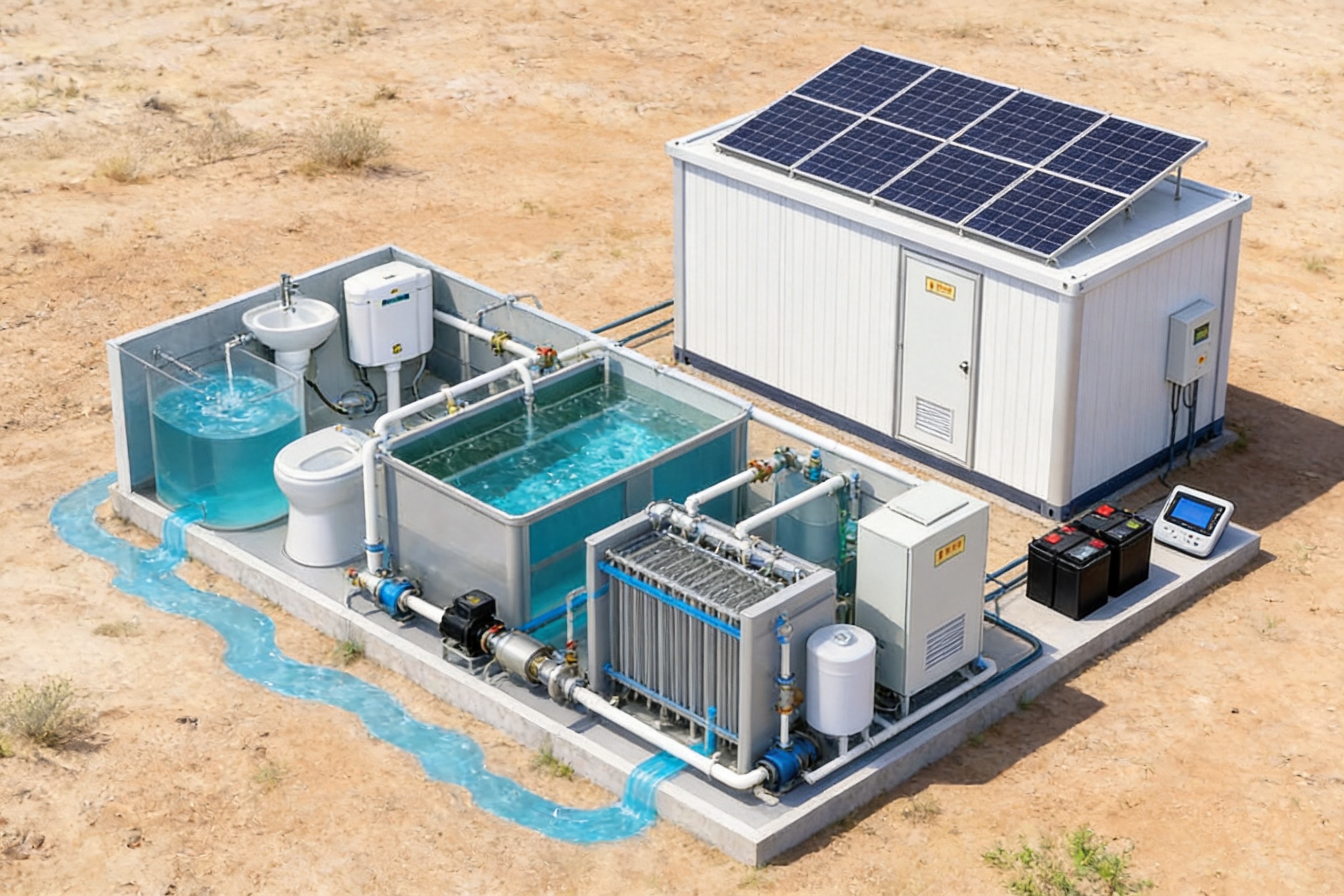
A standard treatment configuration may use biological or chemical processes to reduce organic pollutants and stabilize wastewater. More advanced configurations can combine several stages, including sewage crushing, lifting, anoxic treatment, aerobic treatment, sedimentation, membrane filtration, ion removal, and ozone purification. The exact process should be selected according to local regulations, wastewater characteristics, climate, expected capacity, and the intended use of treated water.
In a multi-stage biological system, wastewater first enters a collection or lifting section. Solid materials may be reduced in size before the wastewater is transferred into biological treatment chambers. Anoxic and aerobic stages allow microorganisms to break down organic matter under controlled conditions. Following biological treatment, suspended solids can be separated through sedimentation or membrane filtration.
Enhanced configurations may add membrane bioreactor technology. MBR treatment combines biological processing with membrane separation, allowing treated water to achieve a higher level of clarity and lower suspended solids. Ozone purification may then be used to support disinfection and odor control. Ion removal equipment can also be considered where salt accumulation or mineral concentration could affect long-term closed-loop operation.
This integrated arrangement offers a significant advantage over basic portable toilets that depend entirely on holding tanks. It can reduce the frequency of waste removal, lower transport requirements, and improve suitability for remote project locations. It also enables project managers to plan sanitation around treatment capacity rather than around the availability of sewage trucks.
However, treatment performance depends on correct system selection, commissioning, operation, and maintenance. The required capacity should be calculated from the expected number of users, peak usage periods, water consumption, and operating schedule. Local discharge or reuse requirements should also be confirmed before the system is specified.
Closed-Loop Water Recycling and Water Conservation
Water supply can be a major challenge in remote areas. Transporting clean water to a temporary camp or isolated worksite increases cost, fuel consumption, and operational complexity. A modular toilet with a water recycling system can reduce its dependence on external water sources by treating wastewater and reusing suitable treated water for toilet flushing.
The closed-loop concept normally separates water used for flushing from water required for handwashing or drinking. Treated wastewater is directed through the appropriate filtration and disinfection stages before being returned to the flushing system. Fresh water may still be required for initial filling, handwashing, cleaning, evaporation losses, and periodic system replenishment, but total water consumption can be substantially reduced.
Enhanced systems are designed to achieve high recovery rates under suitable operating conditions. The supplied product information indicates that advanced configurations may achieve water recovery rates exceeding 80 percent, while typical operation can reduce fresh water demand significantly compared with conventional flush toilets. Actual performance depends on user behavior, treatment design, climate, cleaning practices, and system maintenance.
Water recycling provides both environmental and economic benefits. Reduced water demand helps conserve local water resources, particularly in desert, drought-prone, or ecologically sensitive regions. Lower freshwater transport requirements can decrease fuel use and logistical costs. Reduced wastewater discharge can also help project owners comply with environmental management plans.
The water recycling system must be designed with appropriate safeguards. Treated water intended for flushing should not be confused with drinking water, and separate piping, labels, access controls, and maintenance procedures are important. Monitoring equipment can be used to track water quality, pump operation, tank levels, and treatment performance.
Smart Unattended Operation
Many remote sanitation facilities cannot justify the permanent presence of an operator. A facility that requires frequent manual intervention may be unsuitable for mining camps, construction sites, highways, border areas, ecological reserves, and emergency locations. The ST-PTL is designed to support unattended or reduced-attendance operation through automated controls.
Automated functions may include pump sequencing, tank level management, treatment cycle control, ventilation, lighting, flushing, alarms, and equipment protection. Control logic can be configured to start or stop components according to operating conditions. For example, pumps may be activated when a treatment chamber reaches a specified level, while alarms can indicate abnormal water levels, overload conditions, or equipment faults.
Smart operation reduces routine labor requirements and helps operators manage facilities from a distance. Remote monitoring can be added for projects that need centralized supervision. Depending on the system design, operators may monitor operating status, treatment parameters, equipment alarms, energy use, and maintenance reminders.
Automation does not eliminate the need for maintenance. Pumps, filters, membranes, biological treatment components, electrical equipment, ventilation fans, and sanitary fixtures still require inspection and servicing. The primary benefit is that maintenance can be planned according to actual system condition rather than relying solely on frequent manual checks.
Reduced attendance also improves suitability for locations where worker access is difficult or dangerous. In disaster response areas, isolated energy projects, and severe-weather environments, minimizing unnecessary site visits can improve safety and reduce operating costs.
Factory-Built Structural Quality
The performance of a modular toilet depends not only on the treatment equipment but also on the quality of its building envelope. The unit must protect users and equipment from rain, wind, ultraviolet exposure, temperature changes, humidity, corrosion, and repeated public use.
The product is built around a high-strength steel frame and durable wall panels. The supplied technical information identifies Q235B galvanized steel with powder coating as a typical structural solution. Galvanizing helps protect steel from corrosion, while powder coating provides an additional finished surface and improves appearance. The combination is suitable for many demanding outdoor applications when properly specified and maintained.
Sandwich panels using EPS, rock wool, or polyurethane insulation can be selected according to thermal, fire, acoustic, and budget requirements. Insulated panels help maintain a more stable interior temperature and can reduce heat transfer through the walls and roof. They also improve user comfort in hot and cold climates.
Factory production provides important quality advantages compared with fully site-built toilets. Steel components can be cut, formed, coated, and assembled using controlled procedures. Panel dimensions can be standardized, connection points can be prepared in advance, and plumbing and electrical routes can be coordinated before delivery. This reduces the risk of inconsistent workmanship caused by changing site conditions.
Factory assembly also allows the manufacturer to conduct inspections before shipment. Doors, windows, sanitary fixtures, pipes, lighting, ventilation, control equipment, and treatment components can be checked as part of an integrated system. Identifying problems before delivery is generally easier and less expensive than correcting them after installation in a remote location.
Advanced Manufacturing Capabilities
Suzhou Shengtu Integrated Housing Co., Ltd. operates a modular housing production system supported by specialized equipment and standardized manufacturing procedures. The company’s production capabilities include fully automatic cold-bending forming equipment, automatic coating lines, stamping profile production systems, and supporting fabrication equipment.
Cold-bending forming equipment is used to produce accurately shaped steel profiles and structural components. Automated forming helps maintain consistent dimensions across repeated production runs. Consistency is important for frame alignment, panel installation, door and window fitting, roof assembly, and the connection of modular units.
Automatic coating lines improve the uniformity of protective finishes. A controlled coating process can help ensure better coverage, consistent appearance, and more reliable corrosion protection than irregular manual application. The exact coating specification can be selected according to the project environment, including coastal, humid, industrial, desert, or high-UV conditions.
Stamping and profile production equipment supports the manufacture of specialized components used in modular housing and steel structure systems. By producing key profiles internally, the company can improve coordination between structural design, panel dimensions, trim details, and installation requirements.
The company’s standardized, mold-based production approach is intended to improve efficiency and repeatability. Standardized processes allow common components to be produced reliably while still permitting customization in dimensions, colors, internal layouts, sanitary fixtures, and treatment systems.
A modular toilet requires coordination between multiple disciplines. Structural fabrication, panel installation, plumbing, electrical wiring, ventilation, water treatment, controls, and interior finishing must work together. A manufacturer with integrated housing and steel structure experience is better positioned to coordinate these interfaces than a supplier that provides only an isolated restroom cabin or a standalone treatment machine.
The company organizes quality monitoring in accordance with national standards and technical specifications. Management system certifications and quality documentation can provide additional confidence for buyers, particularly for overseas projects that require traceability, inspection records, material documentation, and compliance submissions.
Advantages Compared with Conventional Temporary Toilets
| Evaluation Factor | Basic Portable Toilet | Conventional Site-Built Toilet | Prefabricated Modular Mobile Toilet |
| Deployment Speed | Very fast placement | Usually slow because of civil works | Fast factory-prepared installation |
| Sewage Handling | Usually holding tank based | External sewer or septic system | Integrated treatment options |
| Water Consumption | Varies by design | Usually dependent on fresh water supply | Closed-loop recycling available |
| Remote Area Suitability | Limited by pumping logistics | Often difficult to construct | Designed for off-grid applications |
| Relocation Capability | High | Low | High, subject to transport planning |
| User Comfort | Basic to moderate | Can be high | Can include full restroom facilities |
| Customization | Usually limited | High but time-consuming | High with modular factory production |
| Operational Labor | Frequent servicing may be required | Routine facility maintenance | Automated operation with planned maintenance |
| Environmental Performance | Dependent on waste collection | Dependent on external infrastructure | Integrated treatment and water reuse options |
Compared with basic portable toilets, the modular system provides a more complete environment for users and operators. It can include proper washbasins, ventilation, lighting, insulated walls, durable finishes, and a controlled wastewater process. This makes it more suitable for longer-term use and high-demand environments.
Compared with permanent construction, the modular unit requires less site work and can be relocated when a project ends or a demand pattern changes. It also reduces exposure to weather delays and local construction constraints because most of the work is completed in a controlled factory environment.
Compared with container conversions performed entirely on site, a purpose-designed modular toilet benefits from coordinated factory production. Structural members, wall panels, sanitary systems, and treatment equipment are developed as an integrated package rather than assembled as unrelated components.
Custom Layouts for Different Users and Applications
One of the strongest advantages of the product is its flexibility. The standard size is approximately 6.0 by 3.0 by 2.8 meters, but custom dimensions and colors are available. This allows the facility to be adapted to land conditions, transportation restrictions, expected capacity, architectural surroundings, and the preferred number of compartments.
Fixture selection can include Western-style water closets or squatting pans. Washbasins, urinals, showers, mirrors, hand dryers, soap dispensers, baby-changing facilities, and cleaning stations can be included according to the project brief.
Accessibility is another important design consideration. A unit can be configured with wider doors, accessible turning space, grab bars, lower fixtures, ramp access, and other features required by applicable local regulations. Accessible layouts should be developed early because they affect the structural dimensions, plumbing routes, door positions, and internal circulation.
Separate male and female sections may be appropriate for public venues, schools, camps, and transportation facilities. Family-friendly layouts can combine child-friendly fixtures and additional space for caregivers. Shower and changing facilities can be added for construction camps, mining operations, military facilities, sports sites, and emergency shelters.
Exterior color and finish can be selected to match a project’s visual identity or surrounding environment. Neutral colors may be preferred for nature reserves and resorts, while high-visibility colors can support emergency response and public event applications. Branding and signage can also be coordinated with the exterior panel system.
Applications in Remote and Demanding Environments
Construction Sites
Construction projects often move through several phases, and sanitation requirements may change as workforce numbers increase or decrease. A modular toilet can be delivered at the beginning of a project, operated during the construction period, and relocated or reused elsewhere after completion. Integrated treatment reduces the need to connect to temporary sewer networks.
Mining Camps and Energy Projects
Mining, oil, gas, wind, and solar projects are frequently located far from municipal services. A robust modular toilet can support workers in remote camps while reducing the need for sewage transport. Insulated panels, durable steel framing, automated controls, and water recycling are especially valuable where climate conditions and supply routes are challenging.
Desert and Water-Scarce Regions
In desert areas, freshwater conservation is a critical operational objective. A closed-loop flushing system can reduce the volume of water that must be transported to the site. UV exposure, dust, heat, and temperature variation should be considered when selecting exterior finishes, ventilation systems, filters, pumps, and control equipment.
Emergency and Disaster Relief
After floods, earthquakes, storms, or other disasters, local sanitation infrastructure may be damaged or overloaded. A factory-prepared mobile toilet can be transported to a relief site and installed more quickly than a permanent building. The unit can provide a controlled sanitation environment for displaced residents, medical teams, rescue workers, and temporary shelters.
Eco-Resorts and Tourist Facilities
Eco-resorts and outdoor tourism facilities often require sanitation without damaging sensitive landscapes or building extensive sewer networks. Modular units can be positioned in carefully selected locations and moved if site planning changes. Water recycling and low-discharge operation support environmental management objectives while offering a more comfortable experience than basic outdoor toilets.
Public Events and Transportation Facilities
Events, parks, sports venues, roadside facilities, railway construction sites, and transportation hubs may need temporary or expandable restroom capacity. Custom commercial configurations can provide multiple compartments, separate user areas, accessible rooms, and higher-capacity treatment systems for periods of heavy use.
System Components and User Comfort
A successful modular toilet must provide more than wastewater treatment. User comfort, hygiene, safety, and ease of cleaning directly affect public acceptance and facility performance.
High-quality ceramic washbasins and toilet fixtures provide a familiar user experience and are easier to clean than many basic temporary alternatives. The choice between Western-style toilets and squatting pans can be made according to regional preferences and project requirements.
Ventilation systems help remove odors, humidity, and airborne contaminants. Powder-coated aluminum exhaust fans can be selected for durability in damp environments. Airflow should be designed to support effective odor removal without creating uncomfortable drafts or excessive energy use.
Energy-efficient LED lighting provides clear visibility while limiting electrical consumption. Waterproof switches, suitable sockets, and electrical protection devices such as earth-leakage circuit protection can improve safety in wet areas. All electrical work should be reviewed against local codes and project-specific requirements.
A pressure pump can support consistent water delivery where the incoming supply is variable or where the system uses storage tanks. The supplied product information identifies a 1 HP automatic pressure pump as a typical configuration. Pump size should be confirmed through hydraulic calculations based on fixture numbers, pipe lengths, elevation differences, and expected simultaneous use.
Interior surfaces should be durable, moisture-resistant, and easy to clean. Proper sealing around panels, doors, sanitary fixtures, and service penetrations helps prevent water infiltration and supports long-term hygiene. Floors should provide slip resistance and should be shaped or drained to prevent standing water.
Production Process and Quality Control
The manufacturing process begins with project clarification. The manufacturer reviews the required dimensions, number of users, fixture arrangement, treatment technology, climate, energy source, transportation method, installation location, and applicable standards. This stage is essential because a toilet designed for a short-term construction site may have different requirements from a high-capacity public facility or a long-term remote camp.
After the design is confirmed, steel profiles and structural components are produced using forming and fabrication equipment. The frame is checked for dimensional accuracy before surface treatment. Galvanizing, coating, and other protective measures are selected according to the expected environment.
Wall and roof panels are cut and prepared to match the structural module. Openings for doors, windows, ventilation, pipe penetrations, and electrical routes are coordinated in advance. Accurate panel preparation reduces site modification and improves the sealing performance of the finished building.
Interior components are then installed. This stage may include plumbing pipes, sanitary fixtures, electrical wiring, LED lighting, ventilation fans, pumps, control cabinets, treatment tanks, filters, membranes, and other system components. The factory environment allows different trades to work from coordinated drawings and inspection procedures.
The treatment equipment is integrated with the plumbing system and control system. Pumps, tanks, sensors, valves, and control panels should be checked for correct connection and accessibility. Where appropriate, the system can be tested with water before shipment to identify leakage, wiring, control, or flow problems.
Factory pre-installation can reach approximately 90 percent for many standard configurations. This reduces the amount of field labor required and helps shorten the installation period. The final percentage depends on transport limitations, unit dimensions, local regulations, and the complexity of the selected treatment system.
Before shipment, the completed unit can undergo inspections covering structural integrity, panel installation, door operation, plumbing connections, electrical safety, ventilation, lighting, sanitary fixtures, treatment equipment, and overall appearance. Inspection records and technical documentation should be retained for installation, commissioning, operation, and future maintenance.
Installation, Commissioning, and Maintenance
Although the unit is factory prepared, the project site must be properly planned. A level and stable foundation or support platform is required. The base should be capable of carrying the unit’s operating weight, including water, equipment, users, and stored materials. Site access should also be checked to confirm that delivery vehicles and lifting equipment can reach the installation location.
Utility planning should include electrical power, water supply if required, treated water storage, drainage or discharge arrangements, communication connections, and access for maintenance. Off-grid systems may require solar panels, batteries, generators, water tanks, and additional control equipment.
Commissioning normally includes positioning the unit, connecting utilities, checking pipework, filling tanks, testing pumps, activating control systems, verifying ventilation, and confirming that all sanitary fixtures operate correctly. Treatment systems should be started according to the manufacturer’s commissioning procedure, especially where biological processes require time to establish stable microbial activity.
Routine maintenance may include cleaning sanitary fixtures, checking pumps and valves, inspecting filters, monitoring water quality, removing accumulated solids, checking membranes, testing alarms, cleaning ventilation components, and reviewing electrical connections. Maintenance intervals should be adjusted according to user volume and operating conditions.
A preventive maintenance plan is preferable to waiting for failures. Planned inspections can identify unusual pump noise, reduced water pressure, rising energy consumption, odor problems, slow drainage, or treatment performance changes before they become serious operational issues.
Where remote monitoring is available, operating data can support maintenance planning. Operators may use alarms and performance trends to determine when a technician should visit the site. This approach can reduce unnecessary travel while helping prevent unexpected shutdowns.
Environmental and Economic Benefits
The environmental value of the modular toilet comes from the combination of mobility, integrated treatment, water conservation, and durable construction. Local treatment can reduce the need to transport untreated waste over long distances. Water recycling can lower freshwater consumption. Factory production can reduce site waste and improve material utilization through standardized cutting and assembly.
The economic benefits extend beyond the purchase price. A project should consider installation labor, civil engineering, sewage transport, water delivery, maintenance access, energy use, relocation, and future reuse. A factory-built unit may offer a lower total operating cost when these factors are considered over the project lifecycle.
Mobility provides additional value. A toilet installed for one construction phase may later be moved to a different site. A public event operator may deploy the same unit at different venues. A mining company may transfer facilities between exploration and production areas. This reuse potential can improve asset utilization compared with permanent buildings that become obsolete when a project ends.
Durability also affects lifecycle value. A galvanized and coated steel frame, insulated panels, protected electrical systems, and replaceable treatment components can support a design service life of approximately 15 to 20 years under normal conditions, subject to proper maintenance and the actual environment.
Choosing the Right Configuration
Project owners should begin by identifying the expected number of users and the peak daily demand. A facility serving a small remote crew may require a different treatment capacity from a public park, school, event venue, or transportation hub.
The next consideration is operating duration. Short-term projects may prioritize fast deployment and basic treatment, while long-term remote facilities may benefit from advanced membrane treatment, ozone purification, remote monitoring, solar integration, and higher-grade corrosion protection.
Water availability should also be evaluated. If fresh water is readily available and wastewater can be legally discharged, a standard system may be sufficient. If water must be transported over long distances or wastewater discharge is restricted, enhanced water recycling becomes more attractive.
Climate and site conditions affect the structural and mechanical specification. Cold regions may require additional insulation and freeze protection. Hot regions may require reflective finishes, stronger ventilation, and equipment rated for high temperatures. Coastal or industrial areas may require enhanced corrosion protection. Dusty locations may require suitable filters and protected equipment enclosures.
Local building, sanitation, electrical, accessibility, and environmental regulations should be reviewed before finalizing the design. The manufacturer can then prepare drawings, equipment lists, treatment specifications, and compliance documentation for approval.
Comparison of Available Product Categories
| Category | Standard Integrated Treatment | Enhanced Water Recycling | Custom Commercial and High-Capacity |
| Treatment Approach | Biological or chemical treatment | Multi-stage biological, MBR, and ozone options | Configured according to project requirements |
| Water Recycling | Closed-loop flushing support | High recovery, potentially above 80 percent | Customized according to capacity and regulations |
| Automation | Basic automatic controls | Smart unattended operation and monitoring options | Customized control architecture |
| Typical Application | Construction sites and remote camps | Long-term camps, deserts, and eco-resorts | Events, schools, parks, and transport facilities |
| Layout | Single or dual compartment | Standard or custom configuration | Multiple compartments and accessible layouts |
| Solar Integration | Optional | Available for off-grid projects | Specified according to energy requirements |
| Typical Production Period | 15 to 20 working days | 15 to 20 working days | Approximately 20 to 25 working days |
The standard category is suitable for projects that need reliable treatment and practical sanitation at a controlled cost. The enhanced category is appropriate when water reuse, autonomous operation, and long-term environmental performance are priorities. The custom commercial category is intended for facilities where capacity, accessibility, appearance, branding, or complex internal layouts are essential.
Why Manufacturer Experience Matters
A modular mobile toilet is a multidisciplinary product. A supplier must understand structural design, panel systems, interior finishing, sanitary plumbing, electrical protection, ventilation, wastewater treatment, transport, installation, and after-sales support. Weak coordination between these areas can create leakage, odor, access, maintenance, or commissioning problems.
Suzhou Shengtu Integrated Housing Co., Ltd. has experience in prefabricated modular houses, packaged modular houses, integrated buildings, steel structures, and color steel sheet houses. This background supports the company’s ability to manufacture not only the external shell but also the structural and architectural components required for an integrated sanitation facility.
The company previously operated under the name Suzhou Fulian Integrated Housing Engineering Co., Ltd. and has developed experience through domestic projects, including government-related work. Its overseas business development provides a foundation for serving international customers that require export coordination, technical documentation, customization, and communication across different project standards.
The company’s production line, automated equipment, standardized molds, and organized quality monitoring support repeatable manufacturing. Its product range also includes lightweight color steel houses, integrated houses, and packaged container houses, allowing customers to coordinate sanitation facilities with worker accommodation, offices, storage buildings, security rooms, and other modular structures.
For international buyers, supplier evaluation should include production capacity, quality procedures, material specifications, treatment performance, documentation, packaging, shipping experience, installation guidance, spare parts, warranty terms, and technical support. A capable manufacturer should be able to explain how the proposed system will perform under the customer’s actual site conditions.
Frequently Asked Questions
Q1: What is a prefabricated modular mobile toilet?
A prefabricated modular mobile toilet is a factory-built restroom facility that can be transported and installed at different locations. It may include toilet compartments, washbasins, ventilation, lighting, water supply, sewage treatment equipment, water recycling equipment, and an equipment control room within one modular structure.
Q2: Can the unit operate without a municipal sewer connection?
Yes. The unit is designed for remote and off-grid applications and can incorporate an integrated biological, chemical, membrane, or combined sewage treatment system. The exact level of independence depends on the selected configuration and whether the site has access to electricity, water, drainage, or renewable energy.
Q3: How does the water recycling system work?
Wastewater is collected and treated through the integrated treatment system. After suitable filtration and disinfection, treated water can be directed back to the flushing system. Fresh water may still be needed for initial filling, handwashing, cleaning, evaporation, and periodic replenishment. Advanced systems may achieve recovery rates exceeding 80 percent under suitable operating conditions.
Q4: What is the standard size?
The standard size is approximately 6.0 meters long, 3.0 meters wide, and 2.8 meters high. Custom dimensions are available according to transportation limitations, site conditions, user capacity, internal layout, and project standards.
Q5: Can Western toilets and squatting pans both be provided?
Yes. Internal fixtures can be selected according to regional preferences and project requirements. The layout may include Western-style toilets, squatting pans, washbasins, urinals, showers, accessible fixtures, and other restroom equipment.
Q6: Is the modular toilet suitable for unattended operation?
The unit can be equipped with automated controls for pumps, flushing, treatment cycles, water levels, ventilation, alarms, and other operating functions. Enhanced configurations may support remote monitoring. Although automation reduces daily labor, regular inspection and preventive maintenance remain necessary.
Q7: How long does production take?
Standard configurations generally require approximately 15 to 20 working days. More complex commercial or high-capacity units may require approximately 20 to 25 working days. The final schedule depends on customization, treatment equipment, quantity, inspection requirements, and shipping arrangements.
Q8: Can the toilet be used in deserts or high-UV environments?
Yes. The structure uses weather-resistant steel framing and durable wall panels, while finishes, insulation, ventilation, electrical equipment, and treatment components can be selected for specific climates. Desert projects should also consider dust protection, solar exposure, water storage, cooling, and maintenance access.
Q9: What maintenance does the system require?
Maintenance may include cleaning fixtures, checking pumps and valves, inspecting filters and membranes, monitoring water quality, removing accumulated solids, testing alarms, cleaning ventilation equipment, and reviewing electrical connections. Maintenance frequency should be based on user volume, treatment technology, climate, and operating duration.
Q10: What is the expected service life?
Under normal operating conditions and with appropriate maintenance, the structure can have a design service life of approximately 15 to 20 years. Actual service life depends on corrosion exposure, usage intensity, climate, maintenance quality, treatment equipment replacement, and compliance with operating procedures.
Q11: Can the unit be connected to solar power?
Solar power compatibility can be incorporated into the design. The required solar array, battery capacity, inverter, and backup power source should be calculated from treatment equipment, pumps, ventilation, lighting, climate, and expected daily operating hours.
Q12: What information should a buyer provide for a quotation?
A buyer should provide the intended location, expected number of users, operating period, peak usage, preferred toilet fixtures, number of compartments, water availability, electrical supply, wastewater requirements, climate, transportation limitations, required certifications, and any accessibility or branding requirements.
Conclusion
Prefabricated modular mobile toilets provide a practical alternative to both basic portable toilets and conventional site-built sanitation facilities. By integrating a durable modular building with sewage treatment, water recycling, automated operation, and complete restroom equipment, the ST-PTL offers a more capable solution for remote, temporary, mobile, and high-demand applications.
Its principal advantages include rapid deployment, reduced site construction, internal wastewater treatment, lower freshwater consumption, unattended operation, customizable layouts, durable steel construction, and compatibility with off-grid energy systems. These capabilities are particularly valuable for construction sites, mining camps, disaster relief operations, desert projects, eco-resorts, public events, schools, parks, and transportation facilities.
The manufacturing strengths of Suzhou Shengtu Integrated Housing Co., Ltd. further support the product through automated cold-bending equipment, coating lines, profile production systems, standardized modular processes, integrated assembly, and quality monitoring. The company’s broader experience in prefabricated housing and steel structure production enables it to coordinate the structural, architectural, plumbing, electrical, and treatment elements required for a complete modular sanitation facility.
For the best result, each project should be designed around actual user demand, climate, water availability, energy supply, environmental regulations, treatment requirements, and future relocation plans. With appropriate configuration and maintenance, a prefabricated modular mobile toilet can provide reliable sanitation infrastructure while reducing water consumption, sewage logistics, construction time, and environmental impact.
References
1. Suzhou Shengtu Integrated Housing Co., Ltd. Product Information for ST-PTL Prefabricated Modular Mobile Toilets.
2. Suzhou Shengtu Integrated Housing Co., Ltd. Technical Information on Prefabricated Modular Houses, Steel Structures, and Packaged Container Buildings.
3. International Organization for Standardization. Quality Management Systems and Manufacturing Quality Control Principles.
4. International Organization for Standardization. Environmental Management Systems and Sustainable Resource Management Principles.
5. General technical guidance for non-sewered sanitation systems, integrated wastewater treatment, and water reuse applications.
6. General engineering principles for modular steel construction, insulated sandwich panels, corrosion protection, and prefabricated building installation.
7. General wastewater treatment principles covering biological treatment, membrane bioreactor systems, sedimentation, filtration, disinfection, and ozone purification.
8. General occupational health and safety principles for electrical installations, wet-area facilities, wastewater equipment, and remote-site maintenance.
Product: Prefabricated Modular Mobile Toilets

 View All

Get In Touch
If you have any questions or suggestions, please leave us a message.
Copyright © Suzhou Shengtu Integrated Housing Co., Ltd. All Rights Reserved
PrivacyCustom Modular Container House Manufacturers
