 en
 English
 русский
 Français
 عربى


Prefabricated Modular Mobile Toilets: Complete Off-Grid Sanitation Solutions for Modern Projects
Content
- Why Modular Mobile Toilets Are Becoming Essential
- Product Configuration and Operating Concept
- Principal Advantages of the Integrated Product
- Comparison with Conventional Portable Toilets and Permanent Construction
- Standard Integrated Treatment Configuration
- Enhanced Treatment and High-Recovery Configuration
- Applications Across Multiple Industries
- Manufacturing Process and Quality Strengths
- Engineering and Site Planning Considerations
- Environmental and Economic Benefits
- Customization Options
- Company Manufacturing Capability and Project Support
- Operation, Maintenance, and Service Life
- Procurement Checklist for International Buyers
- Frequently Asked Questions
- Q1: What makes a prefabricated modular mobile toilet different from a basic portable toilet?
- Q2: Does the unit need to be connected to a municipal sewer?
- Q3: Can treated water be used for drinking or handwashing?
- Q4: How much fresh water can the recycling system save?
- Q5: Can the toilet unit operate without grid electricity?
- Q6: Can the internal layout be changed for wheelchair users?
- Q7: What maintenance does the integrated treatment system require?
- Q8: How long does production take?
- Q9: Is the unit suitable for cold or hot climates?
- Q10: What information should be provided when requesting a quotation?
- Conclusion
- References
- Product: Prefabricated Modular Mobile Toilets
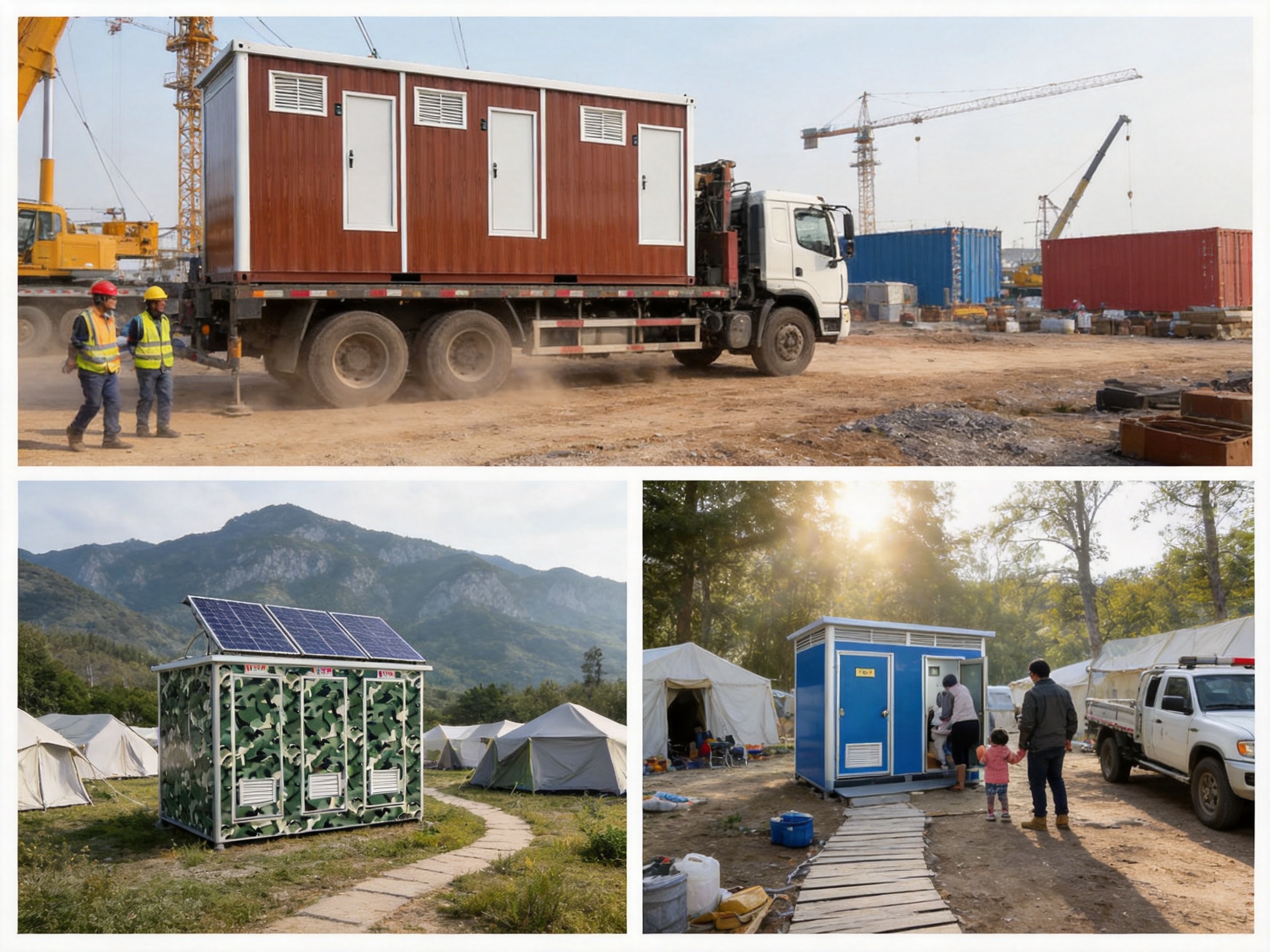
Prefabricated modular mobile toilets have become an important solution for construction projects, remote work camps, public facilities, emergency response operations, tourism developments, and environmentally sensitive locations. Unlike conventional portable toilets that depend on frequent waste collection and external servicing, advanced modular mobile toilet units can integrate sanitation fixtures, water supply systems, sewage treatment equipment, water recycling technology, ventilation, lighting, and automated controls within one factory-manufactured structure.
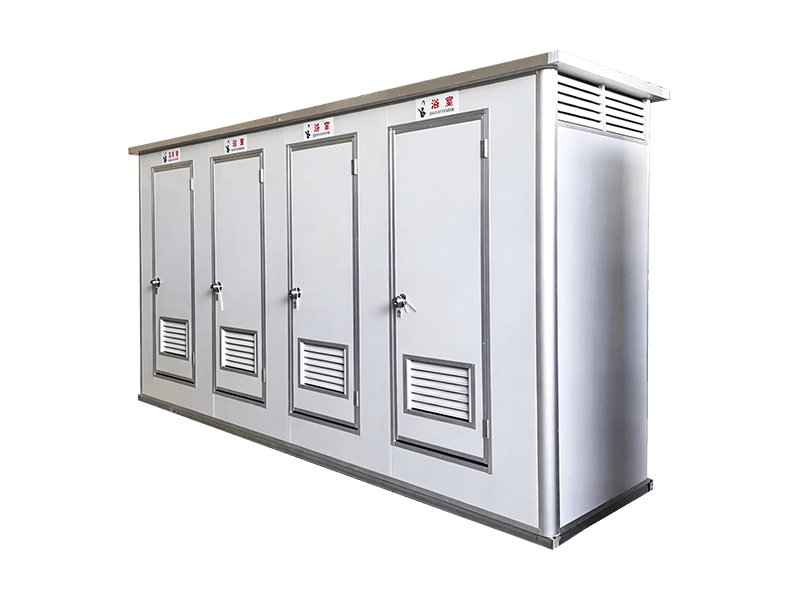
The Prefabricated Modular Mobile Toilets model ST-PTL is designed as a complete, movable, and recyclable sanitation facility. It combines a durable modular building envelope with an integrated biological or chemical sewage treatment system, restroom supporting facilities, and an equipment control room. This configuration helps solve one of the most difficult problems in remote construction and development: how to provide hygienic toilet facilities without relying on municipal sewer pipelines, permanent buildings, or continuous sewage transportation.
With a standard size of 6.0 by 3.0 by 2.8 meters, the unit provides space for toilet fixtures, washbasins, ventilation equipment, control equipment, and wastewater treatment components. Custom dimensions, exterior colors, internal layouts, fixture types, and treatment capacities can also be developed according to project requirements. The standard production cycle is approximately 15 to 20 working days, allowing project operators to obtain a functional sanitation facility considerably faster than through conventional construction.
Manufactured by Suzhou Shengtu Integrated Housing Co., Ltd., the product benefits from the company’s experience in prefabricated modular buildings, steel structures, color steel houses, packaged container houses, and integrated housing systems. The manufacturer combines automated cold-bending forming equipment, automatic coating lines, stamping profile production systems, standardized modular production, and systematic quality monitoring to deliver consistent products for domestic and overseas applications.
Why Modular Mobile Toilets Are Becoming Essential
Traditional sanitation infrastructure is often expensive, slow to build, and difficult to install in locations without established roads, water systems, or sewage networks. A conventional toilet building may require foundations, underground drainage, water supply pipelines, electrical works, ventilation systems, interior finishing, and local permitting. These requirements can delay projects and increase costs, especially when the facility is needed for a temporary construction site, a mobile mining camp, a disaster relief operation, or a seasonal tourism destination.
Basic portable toilets solve part of the problem by providing rapid deployment. However, many conventional portable toilets have limited internal space, depend on frequent pumping, create odor-control challenges, and require regular waste transportation. Their operational cost can increase significantly when they are installed in remote areas. Waste collection vehicles may need to travel long distances, and poor road conditions can make scheduled servicing difficult.
Prefabricated modular mobile toilets provide a more comprehensive alternative. The unit is produced and assembled in a controlled factory environment, transported to the project site, positioned on a prepared base, connected to the required utilities or independent energy systems, and commissioned for operation. Integrated treatment equipment processes wastewater within the unit, while the recycling system can return treated water for toilet flushing. This reduces dependence on external sewage pipelines, water deliveries, and frequent waste removal.
The result is not simply a portable toilet cabin. It is a compact sanitation building with an engineered treatment system, durable structure, controlled interior environment, and long-term operating capability. This difference is especially valuable for projects that need a facility to operate for months or years rather than only for a few days.
Product Configuration and Operating Concept
The ST-PTL modular mobile toilet is organized around several coordinated systems. The structural shell protects the equipment and users from weather conditions. The interior sanitation zone contains toilet fixtures, washbasins, lighting, and ventilation. The treatment zone receives wastewater and performs the necessary processing stages. The equipment control room houses pumps, electrical controls, automation components, and other service equipment.
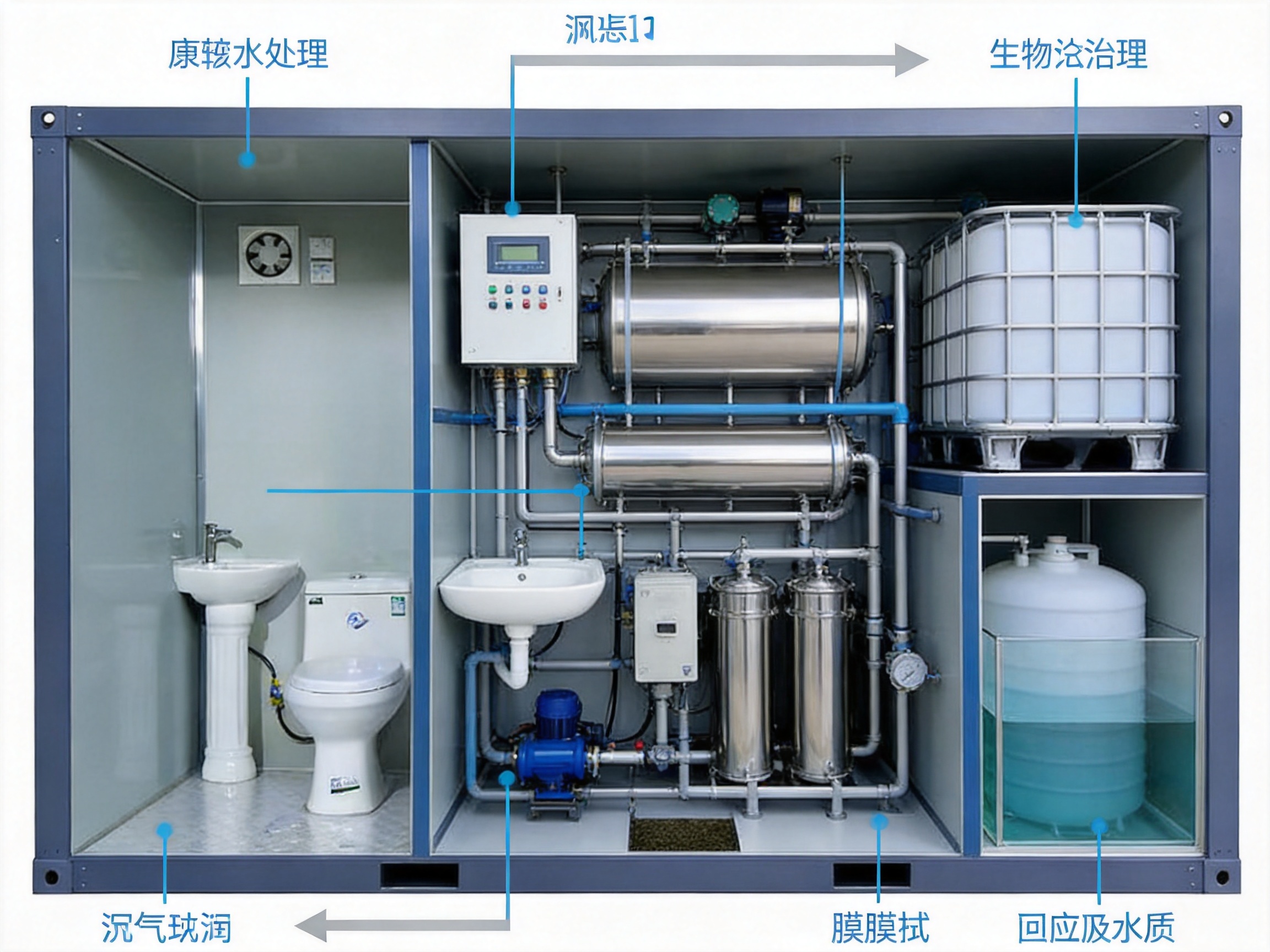
Depending on the selected configuration, wastewater treatment may use biological treatment, chemical treatment, or a combination of multiple technologies. Enhanced systems may include sewage crushing and lifting pumps, anoxic treatment, aerobic biological treatment, sludge sedimentation, membrane bioreactor filtration, ion removal, and ozone purification. The actual treatment process should be selected according to local regulations, expected user volume, water quality targets, climate, and the intended reuse of treated water.
During normal operation, wastewater from toilet fixtures and washbasins is collected through the internal plumbing system. Solids may be reduced through crushing or preliminary separation before the biological treatment stages. Biological processes reduce organic pollutants, while filtration and disinfection improve the clarity and hygiene of the treated water. In systems designed for water reuse, the final treated water can be directed to a storage tank and reused for flushing after meeting the specified quality requirements.
Automated controls coordinate pumps, treatment cycles, water levels, ventilation, alarms, and other operating parameters. This enables the toilet unit to function with limited on-site supervision. Remote monitoring can also be considered for projects where operators need to track equipment status, water levels, alarms, or maintenance requirements from a central management location.
Principal Advantages of the Integrated Product
Self-Contained Sewage Treatment
The most important advantage of the product is its integrated sewage treatment capability. Wastewater is not simply stored for later removal. Instead, the unit can process sewage internally through a treatment system selected for the application. This reduces the need for external sewer connections and helps project operators manage sanitation in areas where conventional discharge infrastructure is unavailable.
For a remote construction camp, this means the sanitation facility can be installed before permanent municipal services are available. For a mining project, it can operate near the work area without requiring a long sewer pipeline. For an emergency relief location, it can provide immediate sanitation without waiting for permanent civil works. For an eco-resort, it can support environmental objectives by reducing discharge and water consumption.
Self-contained treatment also reduces the logistical burden associated with conventional portable toilets. Fewer waste collection trips may be required, reducing fuel use, traffic, labor, and exposure to transportation delays. The exact service interval depends on the treatment configuration, occupancy level, climate, and local operating conditions, but the integrated approach offers a clear advantage over systems that rely entirely on holding tanks.
Closed-Loop Water Recycling
Water conservation is another defining feature. Treated water can be recycled for toilet flushing, reducing the amount of fresh water required during operation. Enhanced treatment configurations may achieve water recovery rates exceeding 80 percent under suitable operating conditions. Standard systems can also provide recycled water for flushing, subject to treatment performance and applicable water-quality requirements.
A recycling system is particularly valuable in deserts, islands, high-altitude sites, drought-prone areas, and locations where water must be delivered by truck. Reducing fresh water demand lowers operating costs and protects local water resources. It also reduces the frequency of water deliveries, which can be difficult during bad weather or seasonal road closures.
Water recycling should be understood as a managed treatment process rather than an unlimited water source. Evaporation, sludge removal, cleaning, leakage, and other losses mean that periodic top-up water may still be required. Nevertheless, a properly designed system can significantly reduce total water consumption compared with conventional flush toilets supplied entirely by fresh water.
Unattended and Automated Operation
Remote facilities often have limited access to maintenance personnel. The smart control system of the modular toilet is designed to reduce routine labor requirements by coordinating pumps, treatment equipment, water storage, and alarms. Automated operation allows the unit to continue functioning without a dedicated attendant remaining on-site throughout the day.
Automation also improves operational consistency. Treatment cycles can be controlled according to programmed parameters rather than relying entirely on manual intervention. Sensors can help identify abnormal water levels, pump conditions, equipment faults, or other issues. When remote monitoring is included, operators can receive information about the facility without traveling to the location for every inspection.
Unattended operation does not eliminate maintenance. Filters, pumps, membranes, ozone components, ventilation equipment, sanitary fixtures, and electrical systems still require periodic inspection and servicing. However, automation can reduce the frequency of routine intervention and allow maintenance teams to plan service visits more efficiently.
Rapid Deployment and Relocation
The factory-assembled design makes the unit suitable for projects that require speed. Approximately 90 percent of the components can be installed before shipment, depending on the final specification. Factory installation improves coordination between structural, plumbing, electrical, and treatment systems. It also reduces the amount of wet work and specialist labor needed at the project site.
After delivery, the site generally requires a suitable supporting base, access for transportation and lifting, and the connections or independent systems specified for the project. Compared with a conventional building, the preparation period is shorter and the risk of weather-related construction delays is lower.
Mobility provides additional value. If a construction phase ends, the unit can be relocated to another work area. A tourism operator can move sanitation capacity as visitor patterns change. An emergency response organization can deploy the unit to a new location after a disaster. This flexibility is difficult to achieve with permanent masonry facilities.
Durability in Difficult Environments
The unit uses a high-strength, weather-resistant steel frame and durable wall panels. The steel structure can be protected with galvanizing and powder coating to improve corrosion resistance. Insulated sandwich panels made with EPS, rock wool, or polyurethane cores can support thermal control, weather resistance, and acoustic comfort.
These construction features help the toilet unit withstand strong sunlight, changing temperatures, wind, rain, dust, and regular public use. The exact performance depends on the selected materials, connection details, foundation, local wind and snow loads, and maintenance program. Nevertheless, a professionally manufactured steel modular structure offers greater long-term durability than lightweight temporary cabins designed only for short-term use.
Interior components are selected for hygiene and serviceability. Ceramic washbasins, Western-style water closets, squatting pans, waterproof switches, LED lighting, ventilation fans, and durable wall or floor finishes can be combined according to the project’s requirements. Easy-to-clean surfaces and accessible service panels help reduce maintenance time.
Flexible Internal Layouts
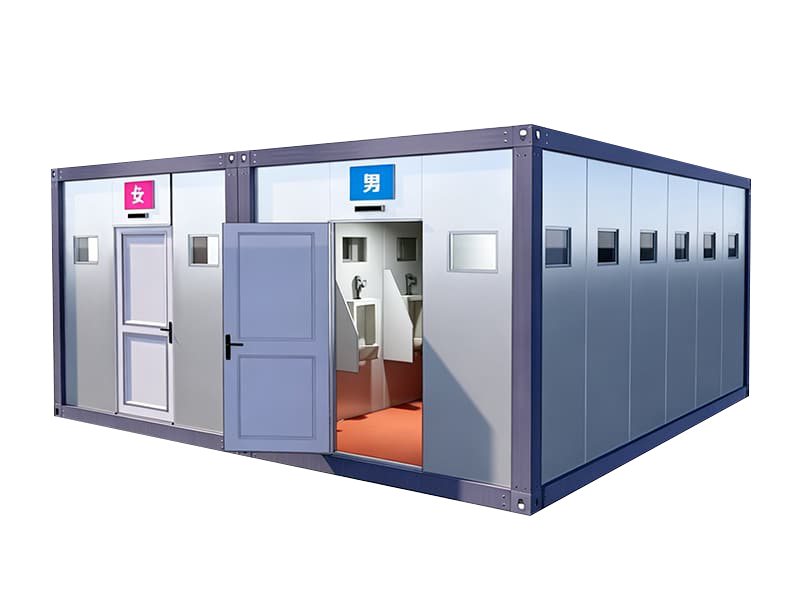
Different locations require different sanitation layouts. The product can be customized with single or multiple toilet compartments, separate male and female areas, accessible facilities, family rooms, shower areas, handwashing stations, storage spaces, and equipment zones. Fixture options may include Western-style toilets or squatting pans.
Custom dimensions allow the unit to fit restricted sites or serve larger user groups. Exterior colors can be selected to match a project’s visual identity, surrounding architecture, or environmental requirements. Branding and architectural finishes can also be considered for public-facing installations.
Accessibility is an important design consideration. A wheelchair-accessible compartment may require an appropriate clear width, turning area, grab rails, ramp or platform access, low-threshold entry, suitable washbasin height, and outward-opening or sliding doors. These details should be developed according to the regulations applicable in the destination country or project location.
Comparison with Conventional Portable Toilets and Permanent Construction
Conventional portable toilets are usually inexpensive to deliver and easy to place, but their capacity, comfort, odor control, and treatment capabilities may be limited. They normally rely on holding tanks and scheduled pumping. This can be suitable for short events but less efficient for remote projects with high occupancy or long operating periods.
Permanent toilet buildings provide excellent integration with municipal infrastructure but require more time, civil construction, and capital investment. They are difficult to relocate and may be uneconomical for temporary sites. They also depend on the availability of external water and sewer networks unless additional treatment systems are constructed.
The modular mobile toilet occupies the middle and higher-performance segment. It provides more space and equipment than a basic portable toilet while avoiding much of the time and civil work associated with a permanent building. Its integrated treatment and recycling systems make it particularly competitive where water and sewer connections are difficult or expensive.
| Evaluation Factor | Basic Portable Toilet | Permanent Sanitation Building | Prefabricated Modular Mobile Toilet |
| Deployment Speed | Very fast | Slow | Fast after factory production |
| External Sewer Requirement | Usually not required, but waste pumping is needed | Usually required | Not required for integrated treatment configurations |
| Water Recycling | Usually unavailable | Depends on separate equipment | Integrated recycling option |
| Long-Term User Comfort | Limited | High | High when properly configured |
| Relocation Capability | High | Very low | High |
| Internal Layout | Limited | Highly customizable | Customizable |
| Remote Operation | Dependent on frequent servicing | Dependent on infrastructure | Suitable for automated operation |
| Environmental Performance | Depends on waste transport | Depends on sewer and treatment infrastructure | Reduced discharge and water consumption |
| Best Application | Short events and temporary use | Permanent urban facilities | Remote, mobile, long-term, and off-grid projects |
Standard Integrated Treatment Configuration
The standard configuration is intended for projects that require reliable treatment, practical operating costs, and rapid installation. It can include a galvanized or coated Q235B steel frame, insulated sandwich panels, sanitary fixtures, internal plumbing, ventilation, LED lighting, automatic pressure pumping, electrical protection, and a biological or chemical wastewater treatment system.
A standard 6.0 by 3.0 by 2.8 meter unit provides a useful balance between transportability and internal capacity. The layout can be arranged for one or more compartments depending on the equipment arrangement and expected occupancy. The unit can serve construction sites, temporary offices, remote camps, field stations, small industrial projects, and other facilities where municipal sewer connections are not available.
The standard system is generally the most cost-effective option when the main objectives are sewage discharge reduction, basic water reuse, rapid deployment, and dependable sanitation. It is suitable for users who do not require the highest level of water polishing or extensive remote data management.
Enhanced Treatment and High-Recovery Configuration
Enhanced treatment units are intended for demanding locations and extended operation. They may combine anoxic biological treatment, aerobic biological treatment, sedimentation, membrane bioreactor technology, ion removal, ozone purification, and odor treatment. The purpose of this multi-stage arrangement is to improve treated water quality and support more reliable recycling.
Membrane bioreactor technology can provide fine separation of suspended solids and treated biological water. Ozone purification can contribute to disinfection and odor control when properly designed and operated. Ion removal equipment may help address salt accumulation, which is a potential challenge in closed-loop systems. Without appropriate management, dissolved substances can become concentrated through repeated recycling and may affect biological treatment performance or equipment life.
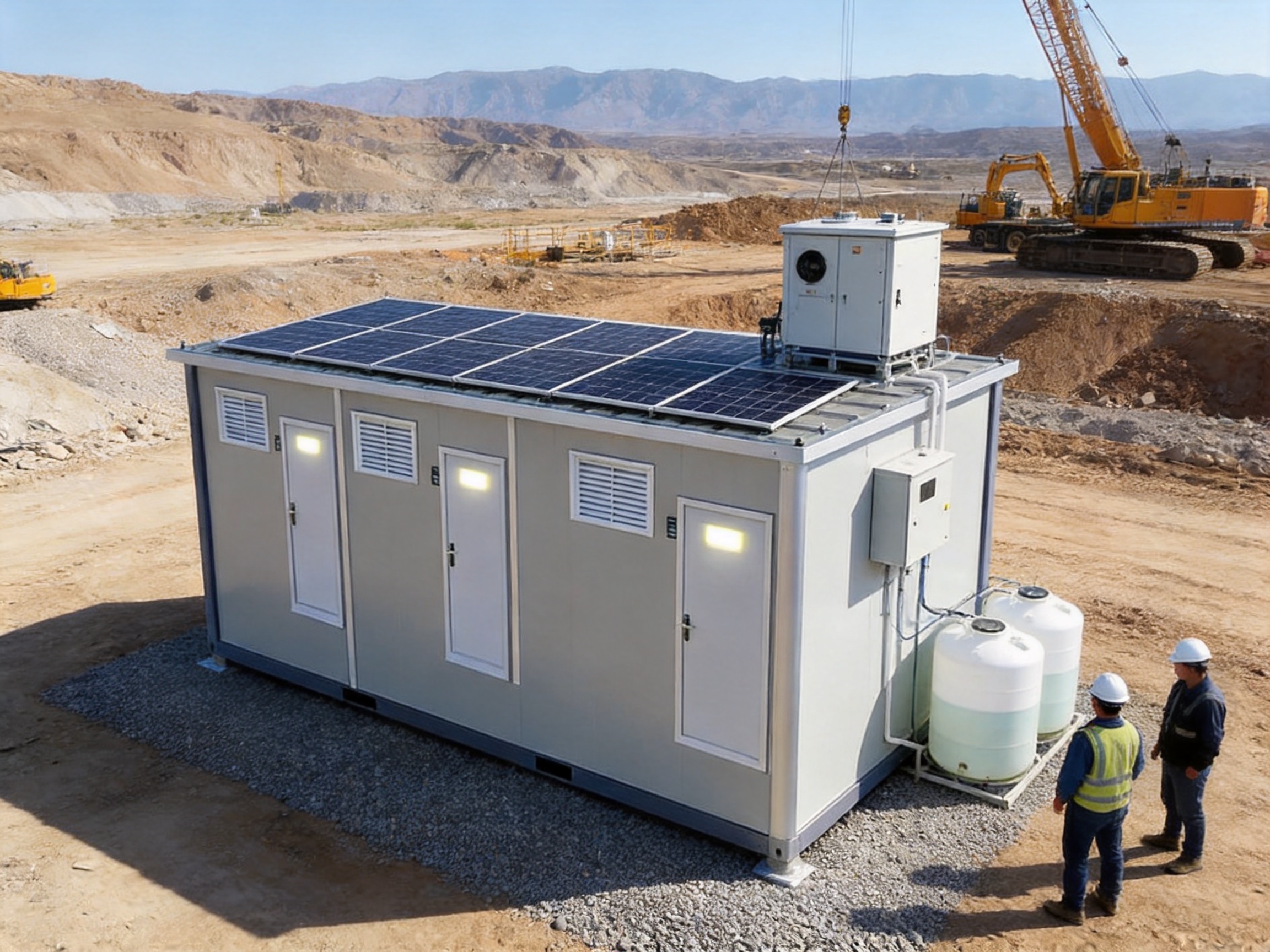
Enhanced systems are suitable for desert mining camps, long-term remote work sites, eco-resorts, environmentally sensitive areas, and relief facilities that must operate independently for extended periods. Solar panel compatibility can also be considered where grid power is unavailable. Energy storage and backup generation should be evaluated carefully because pumps, treatment equipment, ventilation, lighting, and controls require reliable power.
The higher-performance configuration usually involves greater initial investment and more specialized maintenance than a standard system. However, it may offer lower water delivery costs, reduced waste transport, improved environmental performance, and greater operating autonomy over the project life cycle.
Prefabricated Modular Mobile Toilets
Applications Across Multiple Industries
Construction and Infrastructure Projects
Construction sites frequently move through different phases and locations. Workers need hygienic sanitation from the first stage of site preparation, even when permanent buildings and utility networks have not been completed. A modular mobile toilet can be installed near worker accommodation, material storage, road construction areas, railway projects, bridges, dams, and power facilities.
When the project progresses, the unit can be relocated rather than abandoned. Its robust structure helps it withstand dust, vibration, changing weather, and intensive daily use. Treatment and recycling reduce the need for frequent sewage collection and water deliveries, improving site logistics.
Mining and Energy Operations
Mining camps, oil and gas support facilities, renewable energy construction sites, and remote power projects often operate far from cities. Building a conventional sewer network may be uneconomical or technically difficult. A self-contained toilet unit can provide sanitation close to the workforce while limiting the environmental impact of wastewater discharge.
For these applications, the design should account for temperature variation, dust, corrosive atmospheres, site access, fire safety, energy availability, and expected occupancy. Enhanced treatment and remote monitoring may be appropriate for long-term camps where the cost of water and waste transportation is high.
Emergency Relief and Disaster Response
After floods, earthquakes, storms, or other disasters, sanitation infrastructure can be damaged or overloaded. Temporary toilet units can be deployed to shelters, medical stations, worker camps, and public gathering areas. A factory-assembled modular system can offer better hygiene and longer operating capability than simple temporary latrines or holding-tank toilets.
Rapid deployment is especially important during emergency operations. The unit can be prepared in advance, transported when required, and commissioned with limited site work. Treatment and water reuse reduce the need for continuous utility support, which is valuable when roads, water systems, and sewage networks are damaged.
Eco-Resorts and Tourism Facilities
Tourism developments increasingly seek to expand into natural areas while reducing environmental impact. Modular sanitation facilities can be positioned near trails, campsites, desert attractions, island resorts, mountain sites, and seasonal visitor centers. Their exterior appearance can be customized, while internal systems support water conservation and controlled wastewater treatment.
For eco-resorts, visual design and user comfort are important. Custom colors, architectural finishes, quality sanitary fixtures, ventilation, lighting, and accessible layouts can help the unit integrate with the surroundings. The water recycling system supports sustainability goals and may reduce the need for large underground infrastructure.
Public Events, Parks, Schools, and Transport Facilities
High-traffic public applications require strong materials, efficient cleaning, clear internal circulation, and adequate treatment capacity. Modular toilets can be configured with multiple compartments, separate male and female areas, accessible toilets, family rooms, and handwashing zones. They can supplement existing facilities during festivals, sporting events, seasonal peaks, or infrastructure upgrades.
Mobility is a major advantage for event organizers and public authorities. Units can be delivered before an event and removed or relocated afterward. For parks and transport facilities, more permanent placement may be selected, but the prefabricated approach still reduces construction time and site disruption.
Manufacturing Process and Quality Strengths
The reliability of a modular mobile toilet depends on more than the visible bathroom fixtures. Structural accuracy, panel quality, plumbing coordination, treatment integration, electrical safety, waterproofing, corrosion protection, and factory inspection all influence long-term performance. A manufacturer with integrated production capabilities can manage these elements more effectively than a supplier that only assembles unrelated components at the project site.
Automated Cold-Bending Forming
Fully automatic cold-bending forming equipment is used to produce consistent steel profiles for modular structures. Accurate forming supports dimensional stability, repeatable connections, and efficient assembly. Consistent profile geometry also helps ensure that wall panels, roof components, doors, and service openings fit correctly.
For modular buildings, dimensional control is essential because multiple systems must fit within a limited space. A small structural deviation can affect panel installation, waterproofing, door operation, pipe routes, and equipment alignment. Automated forming reduces variation and supports standardized production.
Automatic Coating and Corrosion Protection
Steel components are exposed to moisture, cleaning chemicals, temperature changes, and outdoor weather. Automatic coating lines help achieve more consistent surface preparation and coating thickness than irregular manual application. Depending on the design, galvanizing, powder coating, primer systems, or other protective finishes can be specified.
Corrosion protection is especially important for toilets installed near coastlines, mining areas, humid regions, or locations where cleaning chemicals are frequently used. The coating system should be matched to the local environment, and damaged surfaces should be repaired promptly during maintenance.
Stamping Profile Production
Stamping profile production equipment supports the manufacture of standardized components for frames, trims, connections, and supporting structures. Standardized profiles simplify production, improve replacement availability, and help maintain consistent appearance across different units.
Factory-controlled profile production also allows the company to adapt standard components for customized sizes and layouts. This is useful when a project requires special equipment rooms, additional compartments, shower facilities, accessible entrances, or customized exterior dimensions.
Integrated Factory Assembly
Factory assembly allows the structural frame, wall panels, internal plumbing, wiring, sanitary fixtures, ventilation, lighting, pumps, and treatment equipment to be coordinated before shipment. This reduces the amount of work required in difficult site conditions and makes it easier to perform systematic inspections.
Factory testing can include visual inspections, dimensional checks, plumbing leak tests, electrical safety checks, pump operation tests, equipment control tests, and treatment-system commissioning procedures. The final inspection plan should be based on the selected configuration and the requirements of the destination market.
Standardized Modular Production
Standardized production combines repeatable components with project-specific customization. This approach provides a balance between cost control and design flexibility. The manufacturer can retain proven structural and equipment solutions while adapting dimensions, colors, fixtures, treatment capacity, and internal layouts.
Standardization also supports after-sales service. Replacement parts, operating instructions, maintenance procedures, and technical documentation can be organized around established product configurations. For international buyers, clear documentation is particularly important because local service teams may need to operate and maintain the equipment.
Engineering and Site Planning Considerations
Before ordering a modular mobile toilet, the buyer should define the expected number of users, daily operating hours, peak occupancy, project duration, climate, water availability, power supply, transportation route, foundation condition, and local discharge regulations. These factors influence the treatment system, internal layout, equipment capacity, insulation level, and maintenance plan.
The unit should be placed on a stable and level base capable of supporting its operating weight. The base may be concrete, steel, compacted gravel, or another approved foundation system, depending on site conditions and local engineering requirements. Drainage around the unit should prevent rainwater from accumulating near the structure or entering service areas.
Transportation planning is also important. The buyer should confirm road width, bridge capacity, turning radius, loading equipment, lifting points, delivery restrictions, and final positioning requirements. Although the unit is movable, safe transport requires suitable equipment and a route that can accommodate its dimensions and weight.
Power requirements should be calculated for pumps, ventilation, lighting, controls, treatment equipment, heating, and optional systems. A 1 HP automatic pressure pump may be included in standard configurations, but the total electrical load depends on the selected treatment and comfort systems. Grid power, generator supply, solar panels, battery storage, or hybrid systems may be considered.
Climate affects material selection and equipment design. Cold regions may require additional insulation, heating, freeze protection, and winterized piping. Hot regions may require stronger ventilation, reflective exterior finishes, cooling, and UV-resistant materials. Coastal areas may require enhanced corrosion protection. Dusty locations may require sealed electrical enclosures and more frequent filter maintenance.
Environmental and Economic Benefits
The environmental value of the modular mobile toilet comes from several combined features rather than one isolated component. Internal wastewater treatment reduces uncontrolled discharge. Water recycling lowers fresh water consumption. Factory production reduces the amount of construction waste generated on-site. Relocation allows the same unit to serve multiple project phases or locations.
Reduced waste transport can also lower fuel use and vehicle emissions. Fewer deliveries of fresh water may reduce traffic and logistical costs. In environmentally sensitive areas, avoiding extensive excavation for sewer pipelines helps protect the surrounding landscape.
Economic evaluation should consider the complete life cycle rather than only the purchase price. Relevant costs include transportation, site preparation, installation, water supply, wastewater disposal, electricity, maintenance, replacement parts, labor, relocation, and eventual decommissioning. A unit with a higher initial cost may be more economical when it substantially reduces water delivery, waste pumping, or labor requirements.
The modular format also reduces the financial risk associated with temporary facilities. A permanent building may have limited value after a short project ends, while a movable unit can be transferred to another site. This increases asset utilization and may improve the return on investment for contractors, mining companies, infrastructure developers, public authorities, and emergency organizations.
Customization Options
Customization can begin with the overall dimensions. The standard 6.0 by 3.0 by 2.8 meter format provides a practical starting point, but other lengths, widths, and heights may be developed within transportation and structural limits. Custom sizing is useful for narrow urban sites, large public facilities, compact field stations, and multi-unit installations.
Interior customization includes Western toilets, squatting pans, urinals, ceramic washbasins, shower areas, accessible compartments, family facilities, changing areas, storage cabinets, and service rooms. The number and arrangement of fixtures should be calculated according to expected users and local building requirements.
Exterior customization includes color, signage, branding, cladding appearance, doors, windows, ramps, awnings, and architectural finishes. The manufacturer can coordinate the exterior design with the surrounding site, corporate identity, tourism concept, or public facility standards.
Treatment customization includes biological or chemical processes, enhanced membrane treatment, odor control, ozone purification, ion removal, additional storage, higher capacity pumps, solar compatibility, and remote monitoring. The selected system should not be oversized without reason, because unnecessary capacity can increase capital cost and energy consumption. Conversely, undersizing can lead to poor performance during peak use.
Company Manufacturing Capability and Project Support
Suzhou Shengtu Integrated Housing Co., Ltd. specializes in prefabricated modular houses, packaged modular houses, integrated houses, steel structure projects, and color steel sheet houses. The company formerly operated under the name Suzhou Fulian Integrated Housing Engineering Co., Ltd. and has developed its overseas business platform alongside its established domestic project experience.
The company’s manufacturing facility includes fully automatic cold-bending forming equipment, automatic coating lines, stamping profile production systems, and supporting production equipment. These capabilities support the controlled production of steel frames, modular building components, wall systems, container houses, and specialized sanitation units.
Experience in modular buildings is valuable for mobile toilet production because the product combines several disciplines. It requires structural engineering, panel manufacturing, plumbing, electrical control, ventilation, sanitary fixture installation, wastewater treatment, transportation planning, and site commissioning. A company familiar with integrated housing can coordinate these systems within a compact factory-built module.
The company serves applications in construction, railways, highways, water conservancy, power, mining, tourism, and military camping. These sectors often require fast installation, dependable structures, adaptable layouts, and practical performance in demanding environments. The same manufacturing discipline supports the ST-PTL modular mobile toilet platform.
Quality monitoring is organized according to national standards and technical specifications. For export projects, the buyer and manufacturer should jointly confirm applicable destination-country requirements, electrical standards, plumbing regulations, accessibility rules, structural loads, wastewater discharge limits, and documentation needs. Product configurations can then be developed to suit the intended market.
Operation, Maintenance, and Service Life
With proper maintenance, the structural service life of a modular mobile toilet may reach approximately 15 to 20 years under normal operating conditions. Actual service life depends on climate, occupancy, cleaning chemicals, maintenance quality, corrosion exposure, equipment replacement, and whether the structure is repeatedly relocated.
Daily or routine checks may include cleanliness, water levels, odor conditions, visible leaks, lighting, ventilation, and alarm status. Periodic maintenance may include pump inspection, filter cleaning, sludge management, membrane servicing, ozone equipment checks, electrical testing, pipe inspection, seal replacement, and coating repair.
Operators should keep records of treatment performance, maintenance activities, chemical use where applicable, component replacement, alarm events, and water-quality testing. These records help identify trends and demonstrate compliance with project or regulatory requirements.
Consumable and replacement components should be considered during procurement. Pumps, membranes, filters, valves, lighting components, ventilation fans, control devices, and sanitary fixtures may eventually require replacement. Buyers should request an equipment list, recommended spare parts list, operating manual, wiring diagram, plumbing diagram, and maintenance schedule before commissioning.
Good ventilation is essential for user comfort and equipment protection. Exhaust fans should be checked regularly, and air inlets should remain unobstructed. Odor problems may indicate ventilation failure, excessive loading, poor treatment conditions, blocked pipes, or inadequate cleaning. Early diagnosis can prevent more serious treatment-system problems.
Procurement Checklist for International Buyers
Buyers should begin by preparing a clear technical brief. The brief should state the project location, number of users, estimated daily usage, operating season, expected service life, available utilities, desired water-recycling level, preferred fixtures, accessibility needs, local regulations, and delivery schedule.
The supplier should provide a general arrangement drawing showing the internal layout, fixture positions, equipment room, access doors, service clearances, ventilation routes, plumbing routes, and electrical equipment. Treatment flow diagrams and equipment specifications are also valuable for evaluating the proposed system.
Materials should be identified clearly. The buyer should confirm the steel grade, corrosion protection, panel core, panel thickness, floor construction, waterproofing method, window and door type, sanitary fixture brands or standards, pump specifications, electrical protection, and treatment equipment configuration.
For overseas projects, documentation should include packing information, lifting instructions, installation guidance, commissioning requirements, operation manuals, maintenance schedules, spare-parts recommendations, and warranty conditions. The supplier’s experience with export logistics can help reduce delays and damage during transportation.
Quality inspection may be performed at key stages. Structural components can be checked before enclosure. Plumbing and electrical installations can be inspected before concealed areas are closed. Final tests can verify doors, fixtures, lighting, ventilation, pumps, alarms, and treatment equipment. Factory acceptance testing should be agreed before production begins.
Frequently Asked Questions
Q1: What makes a prefabricated modular mobile toilet different from a basic portable toilet?
A basic portable toilet generally provides a compact enclosure and holding tank, while a prefabricated modular mobile toilet is a larger engineered facility with integrated plumbing, sanitary fixtures, ventilation, electrical systems, equipment controls, and wastewater treatment. It can also include water recycling, multiple compartments, accessible facilities, showers, and remote monitoring. The modular unit is better suited to longer operation, higher user volumes, and remote locations where frequent waste pumping is inconvenient.
Q2: Does the unit need to be connected to a municipal sewer?
No. The ST-PTL can be configured with an integrated biological or chemical sewage treatment system, allowing it to operate without an external municipal sewer connection. It still requires appropriate management of treated water, sludge, energy, and maintenance. The final discharge or reuse arrangement must comply with local regulations.
Q3: Can treated water be used for drinking or handwashing?
The primary reuse application described for this product is toilet flushing. Treated water quality depends on the treatment process and operating conditions. It should not be used for drinking, food preparation, or personal washing unless a specifically designed and legally approved potable-water treatment system is provided. Fresh water should normally be used for handwashing.
Q4: How much fresh water can the recycling system save?
Enhanced systems may achieve water recovery rates exceeding 80 percent under suitable conditions. The actual saving depends on user numbers, flushing volume, cleaning practices, evaporation, leakage, treatment efficiency, and the frequency of top-up water. Compared with conventional toilets that use fresh water for every flush, a closed-loop system can substantially reduce water demand.
Q5: Can the toilet unit operate without grid electricity?
Yes, off-grid operation can be considered through a generator, solar panels, battery storage, or a hybrid power system. The required capacity depends on pumps, treatment equipment, ventilation, lighting, heating or cooling, and controls. A detailed electrical load calculation should be completed before selecting the independent energy system.
Q6: Can the internal layout be changed for wheelchair users?
Yes. Accessible compartments, ramps, wider doors, grab rails, suitable washbasin heights, and maneuvering areas can be incorporated. The design must be checked against the accessibility standards applicable in the project country or region. Accessibility should be considered at the beginning of the design rather than added after production.
Q7: What maintenance does the integrated treatment system require?
Maintenance may include pump checks, filter cleaning, sludge management, membrane inspection, odor-control servicing, ozone-system checks, electrical testing, water-quality monitoring, and periodic replacement of consumable components. The specific schedule depends on the selected treatment technology and operating load. Automated operation reduces routine labor but does not remove the need for planned service.
Q8: How long does production take?
The standard production cycle is approximately 15 to 20 working days. Customized commercial or high-capacity configurations may require approximately 20 to 25 working days, depending on the layout, treatment system, materials, approvals, and production schedule. Transportation and site installation time should be calculated separately.
Q9: Is the unit suitable for cold or hot climates?
Yes, the structure and systems can be adapted for different climates. Cold regions may require enhanced insulation, heating, freeze protection, and winterized water lines. Hot or highly exposed regions may require improved ventilation, UV-resistant finishes, cooling, and additional corrosion protection. Climate conditions should be stated clearly during design.
Q10: What information should be provided when requesting a quotation?
The buyer should provide the project location, required quantity, expected users, dimensions, preferred fixtures, number of compartments, treatment level, water-recycling target, power supply, climate, accessibility requirements, exterior colors, delivery method, and target completion date. Providing complete information allows the manufacturer to prepare a more accurate technical and commercial proposal.
Conclusion
Prefabricated modular mobile toilets offer a practical response to the sanitation challenges of remote, temporary, mobile, and environmentally sensitive projects. By combining a durable steel modular structure with integrated wastewater treatment, water recycling, automated controls, sanitary fixtures, ventilation, and electrical systems, the ST-PTL provides more than a basic temporary toilet. It functions as a complete sanitation facility that can be transported, installed, operated, maintained, and relocated according to changing project needs.
Its key advantages include reduced dependence on municipal sewer networks, lower fresh water consumption, less frequent waste transportation, rapid factory-based production, flexible internal layouts, strong weather resistance, and suitability for unattended operation. Standard configurations provide a cost-effective solution for general remote applications, while enhanced systems with membrane treatment, ozone purification, ion removal, odor control, and remote monitoring can support more demanding long-term operations.
The manufacturing strength behind the product is equally important. Automated cold-bending forming, automatic coating, stamping profile production, standardized modular assembly, and coordinated factory installation help improve consistency and reduce site work. Suzhou Shengtu Integrated Housing Co., Ltd.’s broader experience in modular houses, steel structures, packaged container houses, and integrated building systems supports the production of customized sanitation units for construction, infrastructure, mining, tourism, public service, emergency response, and other industries.
For buyers, the best result comes from matching the treatment technology, structural design, layout, energy system, and maintenance plan to the actual project conditions. When properly specified and maintained, a prefabricated modular mobile toilet can provide a reliable, economical, and environmentally responsible sanitation solution for many years.
References
1. Product technical information for ST-PTL Prefabricated Modular Mobile Toilets, supplied project materials.
2. Company manufacturing and product information for Suzhou Shengtu Integrated Housing Co., Ltd., supplied company materials.
3. General principles of decentralized wastewater treatment and non-sewered sanitation system design.
4. General guidance on modular steel building fabrication, corrosion protection, insulated sandwich panels, and factory quality control.
5. General engineering practices for water recycling, wastewater treatment, membrane filtration, ozone disinfection, and remote facility management.
Product: Prefabricated Modular Mobile Toilets

 View All

Get In Touch
If you have any questions or suggestions, please leave us a message.
Copyright © Suzhou Shengtu Integrated Housing Co., Ltd. All Rights Reserved
PrivacyCustom Modular Container House Manufacturers
