 en
 English
 русский
 Français
 عربى


Prefabricated Modular Mobile Toilets: Advanced Off-Grid Sanitation for Remote and Sustainable Projects
Content
- 1. Product Overview
- 2. Integrated Sewage Treatment and Water Recycling
- 3. Advantages Over Conventional Portable Toilets
- 4. Structural Design and Material Selection
- 5. Factory Manufacturing and Quality Control
- 6. Smart Unattended Operation
- 7. Standard and Enhanced Configurations
- 8. Applications Across Different Industries
- 9. Customization Options
- 10. Installation, Commissioning, and Maintenance
- 11. Service Life, Durability, and Sustainability
- 12. Manufacturing Strengths of Suzhou Shengtu Integrated Housing Co., Ltd.
- 13. How to Select the Correct Model
- 14. Frequently Asked Questions
- Q1. What makes this different from an ordinary portable toilet?
- Q2. Can the toilet operate without a municipal sewer connection?
- Q3. How much water can the recycling system save?
- Q4. Is the unit suitable for desert or mining locations?
- Q5. Can the unit include showers or accessible facilities?
- Q6. What toilet fixture types are available?
- Q7. How long does production take?
- Q8. Does the unit require daily operators?
- Q9. What is the expected service life?
- Q10. Can the unit be relocated after installation?
- Q11. What certifications should buyers request?
- Q12. How should buyers begin a project inquiry?
- 15. Conclusion
- References
- Product: Prefabricated Modular Mobile Toilets
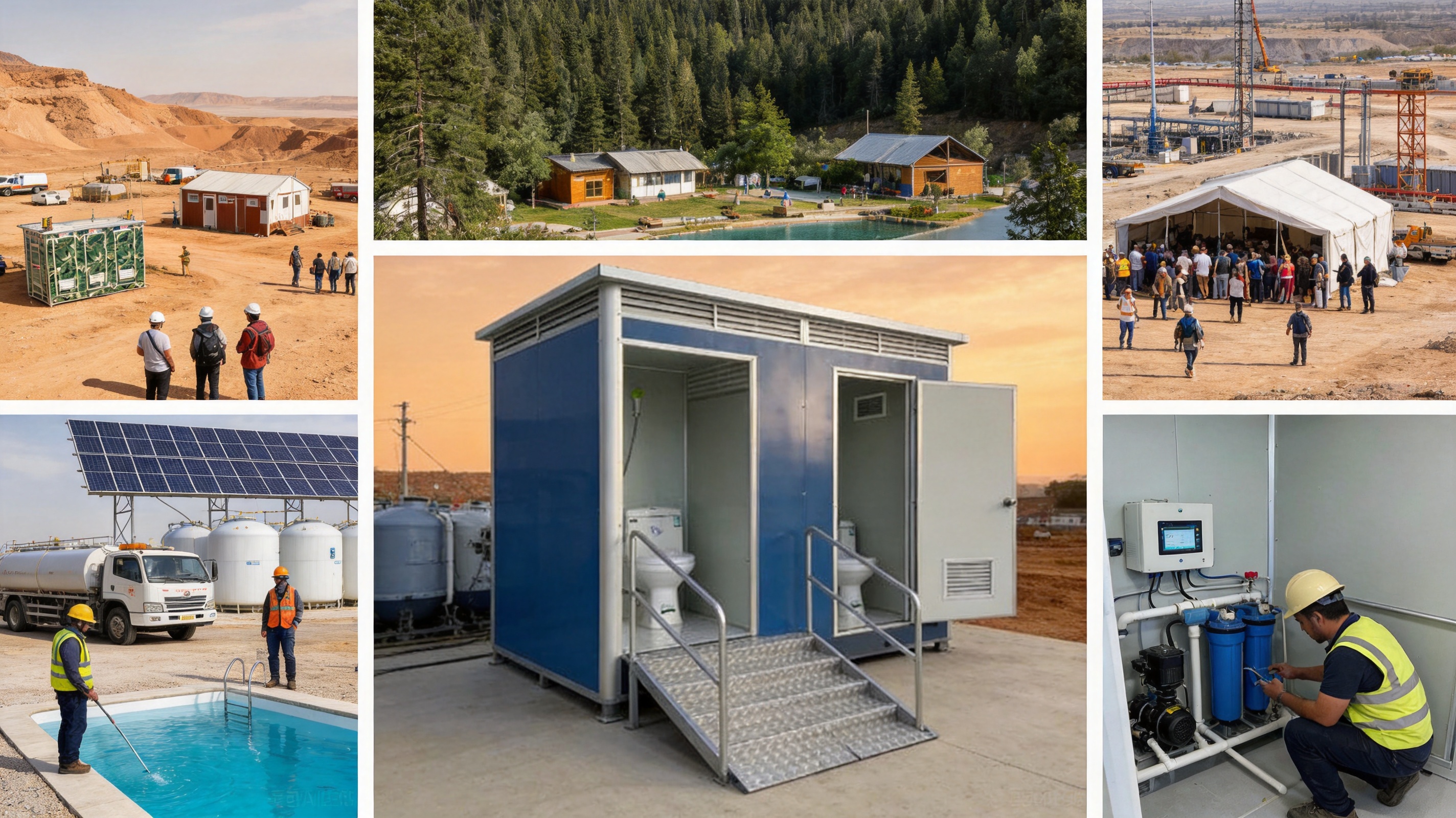
Reliable sanitation is essential for construction sites, mining camps, emergency response operations, eco-tourism facilities, public events, and other locations where permanent municipal infrastructure is unavailable. Traditional toilets in these environments often require extensive civil engineering, underground drainage, frequent sewage removal, and continuous access to clean water. These requirements increase project costs, delay deployment, and create environmental risks when wastewater cannot be handled properly.
Prefabricated modular mobile toilets provide a practical alternative. Designed as complete, factory-assembled sanitation units, they combine restroom facilities, water supply systems, sewage treatment equipment, control systems, ventilation, lighting, and supporting infrastructure within a movable modular structure. The result is a ready-to-use sanitation solution that can be transported, installed, relocated, and adapted to changing project requirements.
The ST-PTL prefabricated modular mobile toilet is developed for applications that require high autonomy, efficient wastewater management, and dependable operation in remote areas. Its integrated sewage treatment system processes wastewater within the unit, while a water recycling system enables treated water to be reused for toilet flushing. By minimizing dependence on external sewer networks and reducing fresh-water consumption, the unit offers clear advantages over conventional temporary toilets and basic portable restroom products.
1. Product Overview
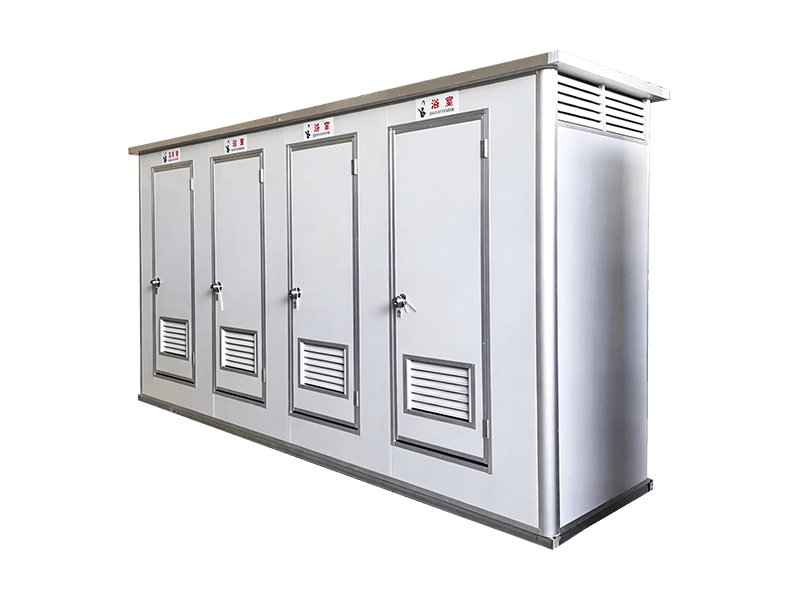
The prefabricated modular mobile toilet is an unattended or semi-unattended sanitation unit that integrates public restroom facilities with an internal sewage treatment and control room. The standard model measures approximately 6.0 meters long, 3.0 meters wide, and 2.8 meters high. Custom dimensions, colors, fixture layouts, and treatment capacities can be developed according to the requirements of a specific project.
Unlike a simple portable toilet cabin, this product is designed as a complete sanitation building. It can include multiple toilet fixtures, washbasins, water supply piping, ventilation equipment, lighting, electrical protection, automatic pumps, wastewater treatment equipment, water recycling equipment, and an equipment control area. Most major components are installed and tested at the factory before delivery, reducing the amount of work required at the destination.
The unit is manufactured with a high-strength steel frame and durable wall panels suitable for repeated transportation and outdoor use. Insulated sandwich panels may be specified with EPS, rock wool, or polyurethane cores, depending on the desired thermal performance, fire-resistance requirements, environmental conditions, and project budget. Exterior colors and finishes can also be customized to match a construction camp, park, resort, municipal facility, or corporate identity.
Its modular configuration makes the toilet suitable for both short-term and long-term applications. It may be used as a temporary facility during infrastructure construction, a permanent sanitation solution in a remote settlement, or a relocatable facility for seasonal events. The same basic structure can be adapted for Western-style toilets, squatting pans, accessible facilities, shower rooms, male and female compartments, or combined toilet and washroom layouts.
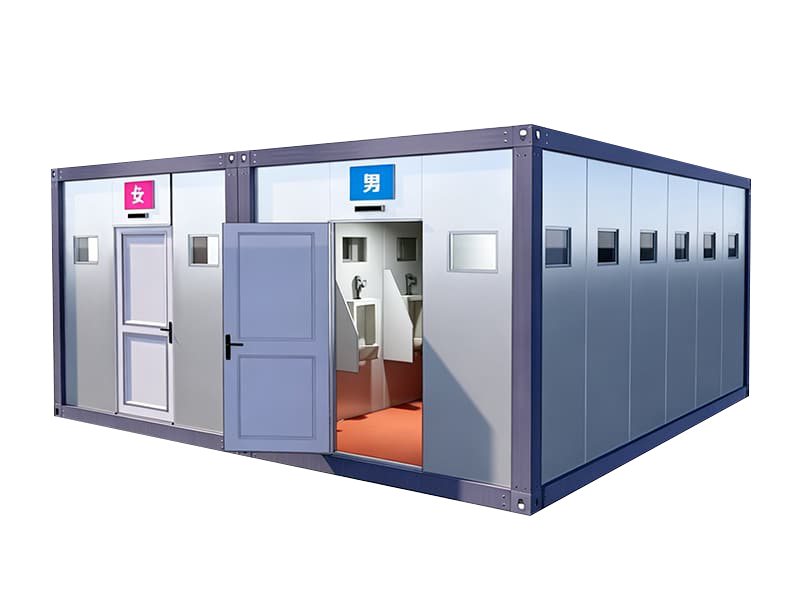
Prefabricated Modular Mobile Toilets
2. Integrated Sewage Treatment and Water Recycling
The primary advantage of the modular mobile toilet is its integrated wastewater management capability. Conventional temporary toilets often depend on holding tanks, frequent vacuum-truck servicing, or nearby municipal sewer connections. These methods may be acceptable for short-term projects with easy vehicle access, but they become inefficient and expensive in deserts, mountainous regions, offshore work areas, mining sites, and disaster zones.
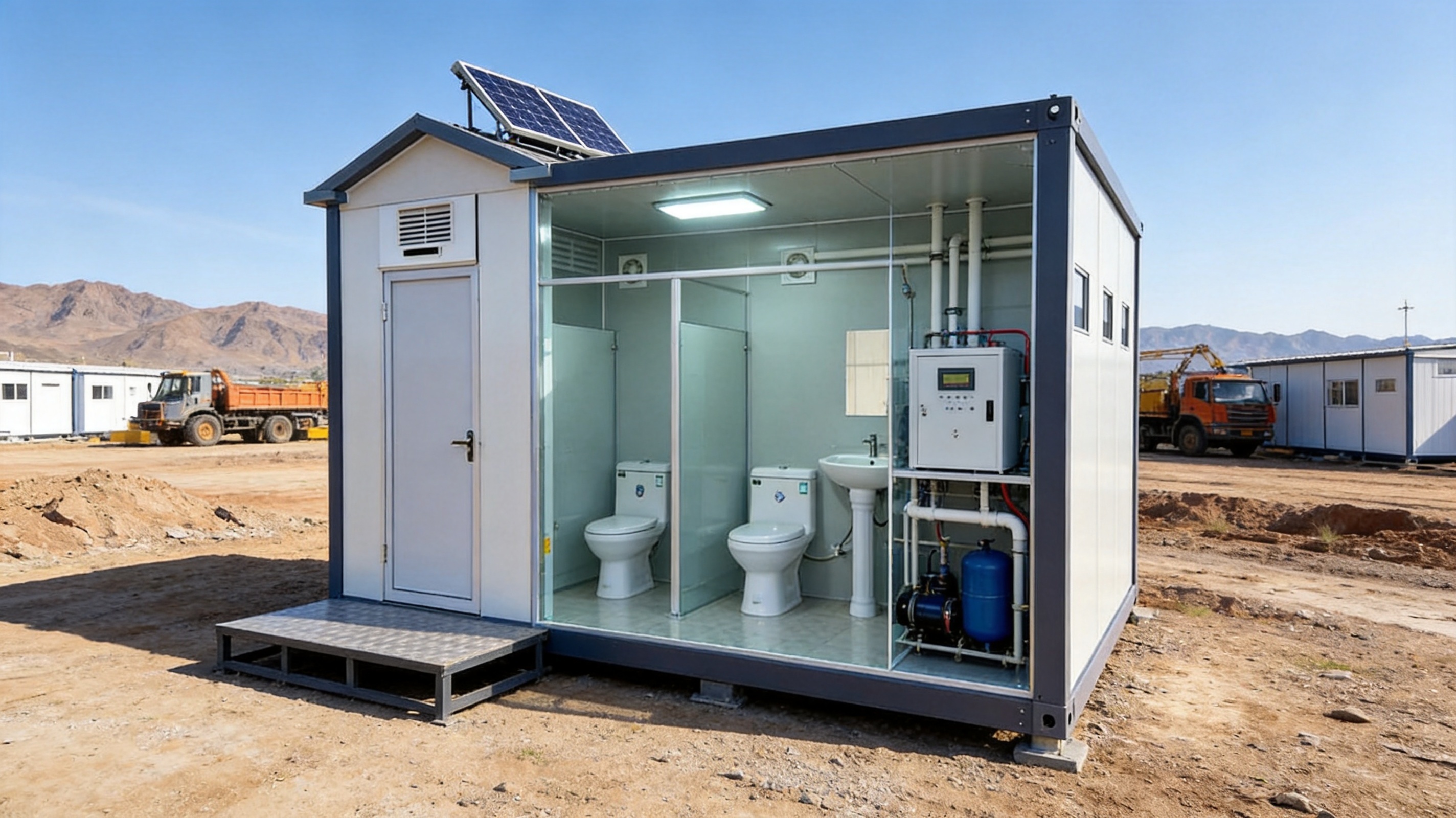
The integrated treatment system processes wastewater inside the modular unit. Depending on the selected configuration, treatment may use biological processes, chemical treatment, membrane filtration, ozone purification, or a combination of these technologies. The treatment equipment is installed in a dedicated technical area, allowing the restroom space and treatment components to operate as one coordinated system.
2.1 Typical Treatment Process
A higher-performance configuration may include a sewage crushing or lifting pump, an anoxic biological treatment stage, an aerobic biological treatment stage, sludge sedimentation, membrane bioreactor treatment, ion-removal equipment, and ozone purification. Each stage serves a specific function in reducing suspended solids, organic pollutants, ammonia, odor, and pathogens.
First, wastewater is collected from the toilet fixtures and transferred through the internal piping system. A crushing or lifting pump helps manage solids and ensures that wastewater can be moved to the treatment area even where gravity drainage is not available. The wastewater then enters biological treatment chambers where microorganisms break down organic matter under controlled oxygen conditions.
Anoxic treatment supports the reduction of certain nitrogen compounds, while aerobic treatment provides oxygen for the biological decomposition of organic pollutants. After biological processing, suspended solids are separated through sedimentation or membrane-based filtration. In enhanced systems, MBR membrane technology provides a more compact and controlled separation process than conventional sedimentation alone.
Ozone purification may be incorporated as a final treatment stage. It helps reduce odor and assists in the disinfection of treated water. Ion-removal equipment can also be used to address salt accumulation, which is an important consideration in closed-loop systems. Without appropriate salt management, long-term recycling may reduce biological activity and affect treatment stability.
2.2 Closed-Loop Water Use
The treated water is primarily intended for reuse in toilet flushing, subject to the selected treatment configuration and applicable local regulations. Reusing treated water reduces the volume of fresh water required for daily operation. Enhanced systems are designed to achieve water recovery rates exceeding 80 percent under suitable operating conditions, while standard configurations provide a practical closed-loop flushing supply.
This approach is particularly valuable in locations where fresh water must be transported by truck or delivered through temporary pipelines. Reduced water demand lowers transportation costs, decreases pressure on local water resources, and reduces the frequency of tank refilling. It also minimizes the quantity of wastewater that must be removed from the site.
Water recycling does not eliminate the need for professional operation and maintenance. Treatment systems require appropriate commissioning, regular inspection, sludge management, periodic cleaning, and replacement of consumable components. The recycling performance also depends on user numbers, wastewater characteristics, climate, electricity availability, and the selected treatment process. Nevertheless, the integrated design substantially reduces the logistical burden compared with conventional temporary sanitation systems.
3. Advantages Over Conventional Portable Toilets
Basic portable toilets are commonly used for short-term events and small construction projects. They are relatively simple, but they usually store waste in a tank that must be emptied by a service vehicle. They may also provide limited ventilation, minimal thermal insulation, and little protection against extreme weather. Their operating model is highly dependent on regular servicing and vehicle access.
The prefabricated modular mobile toilet provides a more complete solution for demanding projects. Its major competitive advantages include internal wastewater treatment, water recycling, high autonomy, structural durability, improved user comfort, and customization flexibility.
3.1 Reduced Dependence on Sewage Removal
Because wastewater can be processed within the unit, project operators do not need to rely exclusively on frequent tank pumping. This is a major advantage in remote regions where service vehicles may require long travel distances or where roads become inaccessible during bad weather. Reduced pumping frequency can lower operating expenses and improve sanitation continuity.
3.2 Lower Fresh-Water Consumption
A conventional toilet system may consume a large quantity of fresh water for flushing, handwashing, and cleaning. In remote areas, this water must often be transported from another location. The closed-loop system reuses treated flushing water and therefore decreases demand for external water supplies. Enhanced systems can recover more than 80 percent of input water for suitable reuse applications.
3.3 Better Suitability for Off-Grid Sites
The unit does not require extensive municipal pipelines or a permanent sewer connection. It can be deployed in construction camps, mining areas, desert operations, rural tourism facilities, disaster relief locations, and temporary project bases. Where grid power is limited, the equipment may be designed for connection to generators or compatible solar-power systems.
3.4 Improved Environmental Performance
Untreated sewage discharge can contaminate soil, surface water, and groundwater. It can also cause odor problems and create public health concerns. An integrated treatment system keeps wastewater within a controlled process, reducing the risk of uncontrolled discharge. Water recycling further supports environmental objectives by conserving water and reducing wastewater transportation.
3.5 Higher User Comfort
Compared with basic portable cabins, the modular unit can provide a more familiar indoor restroom environment. Insulated wall panels improve thermal comfort, while ventilation fans assist with odor control and air exchange. LED lighting, ceramic washbasins, durable toilet fixtures, and organized interior layouts support a cleaner and more comfortable user experience.
3.6 Flexible Relocation and Reuse
The unit is designed to be movable and reusable. After a construction project is completed, it can be transported to another site rather than demolished. This supports a circular approach to temporary infrastructure and can provide a better long-term return on investment than single-use facilities.
| Comparison Item | Basic Portable Toilet | Prefabricated Modular Mobile Toilet |
| Wastewater Handling | Holding tank and periodic pumping | Integrated treatment and controlled discharge or reuse |
| Fresh-Water Dependence | Generally high | Reduced through recycling |
| External Sewer Required | Not always, but tank servicing is required | No municipal sewer required for designed off-grid operation |
| Deployment | Fast placement of individual cabins | Factory-assembled modular installation |
| Climate Protection | Limited insulation in many models | Insulated sandwich panels and durable frame |
| Maintenance Model | Frequent cleaning and waste removal | Automated controls with scheduled system maintenance |
| Typical Service Environment | Short-term events and simple sites | Remote, long-term, high-demand, and environmentally sensitive sites |
| Customization | Usually limited | Dimensions, fixtures, colors, capacity, and layout can be customized |
4. Structural Design and Material Selection
The performance of a mobile sanitation unit depends not only on its treatment equipment but also on the reliability of its structure. The ST-PTL configuration uses a high-strength steel frame that provides the load-bearing foundation for the wall panels, roof system, internal fixtures, equipment, and transportation requirements.
Q235B galvanized steel may be used for the main framework. Galvanization provides protection against corrosion, while powder coating can add another protective layer and improve surface appearance. The exact material specification should be confirmed according to the project environment, local codes, transportation conditions, and customer requirements.
Sandwich panels form the external and internal enclosure. EPS panels offer an economical insulation option, while rock wool panels may be preferred when greater fire performance is required. Polyurethane panels can provide strong thermal insulation with a relatively thin wall structure. Panel selection should consider the local climate, fire regulations, acoustic needs, cleaning requirements, and anticipated service life.
The roof and wall assemblies are designed to resist normal outdoor exposure, including sunlight, rain, wind, humidity, and temperature variation. In regions with strong ultraviolet radiation or severe weather, additional coating and sealing specifications may be considered. Proper flashing, joint sealing, drainage design, and installation practices are essential to maintain water resistance over the life of the unit.
The interior surfaces are selected for hygiene and maintenance efficiency. Smooth, durable, and easy-to-clean finishes help operators carry out routine sanitation work. Ceramic washbasins and water closets provide a familiar appearance and can be specified in Western-style or squatting configurations. Anti-slip flooring, waterproof electrical components, and sealed service penetrations are important details in a restroom environment.
5. Factory Manufacturing and Quality Control
A major strength of a prefabricated modular product is the ability to move complex work from the construction site into a controlled factory environment. Factory production improves consistency, shortens installation time, and allows the manufacturer to inspect components before shipment. It also reduces the impact of weather, labor availability, and site congestion on the project schedule.
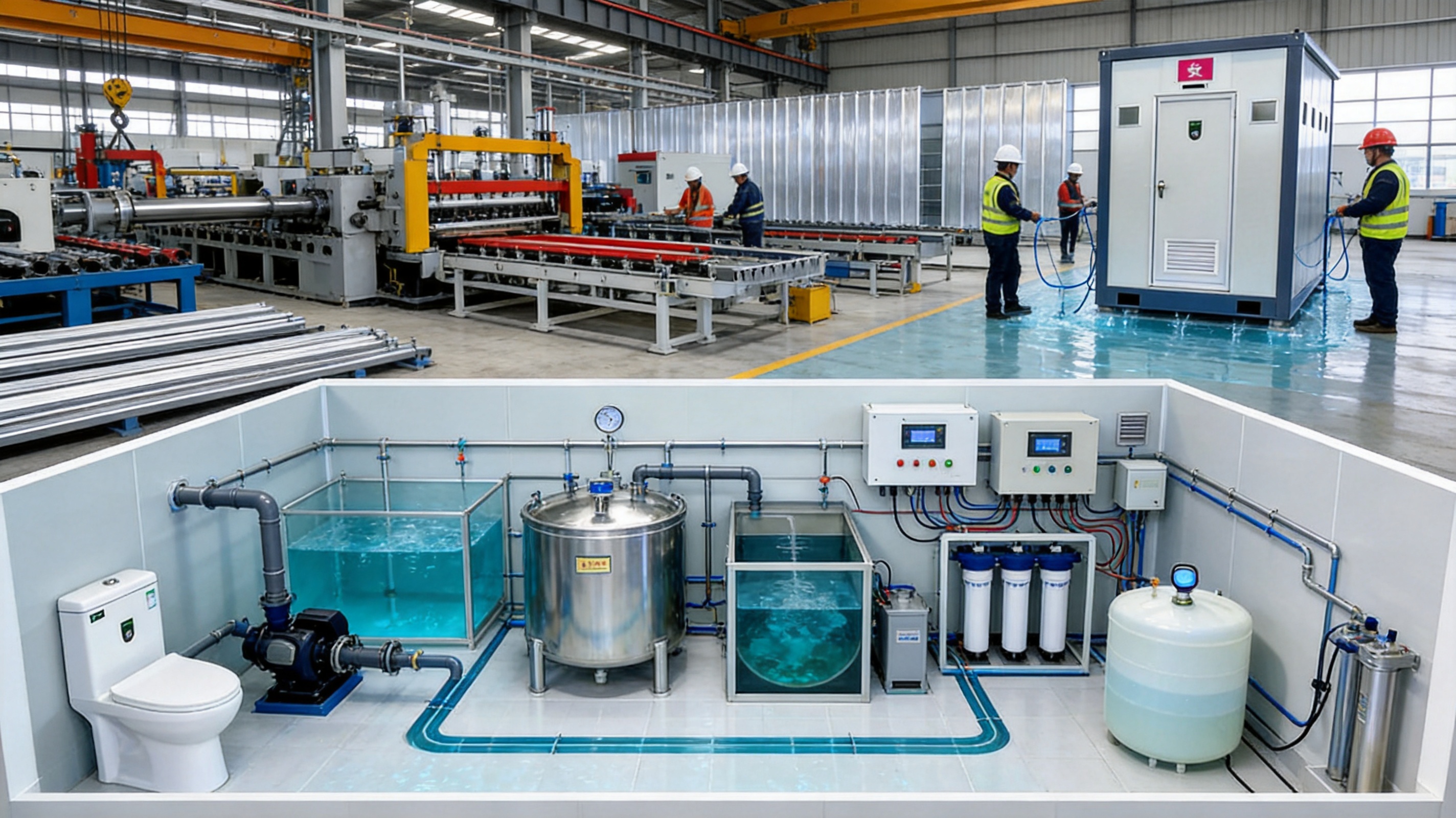
Suzhou Shengtu Integrated Housing Co., Ltd. operates a modular house production line supported by automated cold-bending forming equipment, automatic coating lines, stamping profile production systems, and related manufacturing facilities. These capabilities support the production of steel frames, profiles, panels, and modular building components with repeatable dimensions.
5.1 Automated Cold-Bending Forming
Fully automatic cold-bending forming equipment produces structural profiles with consistent geometry. Accurate profile dimensions are important for frame alignment, panel installation, door and window fitting, and the overall stability of the modular unit. Automated forming also reduces variation between production batches and improves material utilization.
5.2 Automatic Coating and Surface Protection
Automatic coating lines provide a more uniform protective finish than irregular manual application. Proper surface preparation and coating control help improve resistance to corrosion, moisture, and outdoor exposure. The coating color can be adjusted for project requirements, allowing the unit to blend into a site or support a recognizable visual identity.
5.3 Stamping and Profile Production
Stamping profile production systems support the manufacture of standardized connection pieces, structural components, trims, and supporting elements. Standardized profiles make assembly more efficient and simplify quality inspection. They also help the company develop repeatable modular designs while retaining the ability to produce customized layouts.
5.4 Modular Assembly
During assembly, the steel frame, wall panels, roof components, doors, windows, plumbing, electrical systems, sanitary fixtures, ventilation equipment, pumps, control panels, and treatment equipment are installed according to the approved design. The factory environment allows technicians to coordinate different trades before the unit reaches the customer.
Approximately 90 percent of the main components can be pre-installed for suitable configurations. Factory pre-installation reduces the amount of site work and allows the unit to arrive close to a ready-to-use condition. Final site activities may include positioning, anchoring, utility connection, commissioning, water filling, and performance verification.
5.5 Inspection and Testing
Quality control should cover both the building structure and the sanitation equipment. Typical inspection points include steel profile dimensions, weld quality, coating appearance, panel installation, roof sealing, door operation, floor drainage, plumbing connections, electrical insulation, pump operation, ventilation performance, treatment equipment integration, and control-system response.
Water testing is particularly important. Plumbing lines should be checked for leakage and pressure stability before shipment. The treatment system should be inspected for correct pipe routing, pump direction, sensor installation, access for maintenance, and control-panel operation. Electrical systems should include appropriate protective devices such as waterproof switches, residual-current protection, and grounding arrangements suited to the destination country.
6. Smart Unattended Operation
The unit is designed to reduce the need for continuous on-site staffing. Automated controls can coordinate pumps, treatment stages, water levels, alarms, ventilation equipment, and recycling functions. This allows the toilet to operate under a smart-management model, especially when the facility is located far from the project headquarters.
An automatic pressure pump can maintain stable water pressure for flushing and handwashing. Sensors may monitor water levels, pump conditions, equipment status, and treatment stages. When an abnormal condition occurs, the control system can provide an alarm or shut down selected equipment to prevent damage.
Remote monitoring may be added for projects requiring higher operational visibility. A monitoring platform can help operators understand equipment status, maintenance requirements, treatment performance, and alarm history without visiting the unit every day. Remote monitoring is particularly useful for mining camps, distributed construction projects, nature reserves, and emergency facilities.
Automation reduces daily labor requirements, but it does not eliminate maintenance. Operators should establish a planned schedule for checking pumps, cleaning filters, removing accumulated sludge, inspecting membranes, replenishing treatment chemicals where applicable, checking electrical systems, and verifying water quality. Proper maintenance supports stable performance and extends the service life of the equipment.
7. Standard and Enhanced Configurations
7.1 Standard Integrated Treatment Model
The standard configuration is intended for projects requiring dependable internal treatment without the full complexity of an advanced recycling plant. It may use biological or chemical treatment, standard controls, a closed-loop flushing arrangement, basic ventilation, LED lighting, and conventional toilet and washbasin fixtures.
This model is suitable for construction sites, temporary project offices, rural work areas, remote camps, and applications where the number of users and wastewater load are known and moderate. The standard dimensions of approximately 6.0 by 3.0 by 2.8 meters provide sufficient space for a practical restroom arrangement and a technical equipment area.
7.2 Enhanced Water-Recycling Model
The enhanced configuration is designed for long-term and environmentally sensitive applications. It may integrate multi-stage biological treatment, MBR membrane filtration, ozone purification, odor collection, ion removal, advanced controls, and remote monitoring. The system is intended to provide more consistent treated-water quality and higher recycling performance.
Enhanced systems are appropriate for desert mining operations, extended remote camps, eco-resorts, protected areas, and relief projects where water supply and wastewater removal are especially difficult. Solar compatibility may also be incorporated when the project requires greater energy independence.
7.3 Custom Commercial and High-Capacity Model
Commercial configurations can include multiple toilet compartments, separate male and female areas, accessible facilities, family rooms, shower units, larger washbasins, baby-care spaces, and higher-capacity treatment equipment. The external design can be adapted for public parks, event venues, schools, transportation facilities, sports centers, religious facilities, and municipal projects.
Custom commercial units are useful when appearance and user experience are important. Exterior colors, signage areas, brand-neutral architectural treatments, internal materials, fixture arrangements, and accessibility details can be developed within the overall modular structure. The unit may be configured as a standalone building or placed with other modular facilities to create a larger sanitation center.
| Configuration | Standard Integrated Treatment | Enhanced Water Recycling | Custom Commercial |
| Main Treatment | Biological or chemical process | Biological, MBR, ozone, and related stages | Selected according to capacity and regulations |
| Water Reuse | Flushing reuse where designed | High-recovery closed-loop recycling | Customized |
| Automation | Basic automatic controls | Smart controls and optional remote monitoring | Project-specific controls |
| Layout | Single or dual restroom arrangement | Standard or customized arrangement | Multi-compartment and accessible options |
| Typical Application | Construction and remote work sites | Long-term camps and sensitive environments | Events, parks, schools, and public facilities |
| Typical Production Period | Approximately 15–20 working days | Approximately 15–20 working days, subject to equipment | Approximately 20–25 working days for complex designs |
8. Applications Across Different Industries
8.1 Construction and Infrastructure Projects
Construction workers require safe and hygienic sanitation from the beginning of a project. A modular toilet can be delivered before permanent buildings are completed and can remain in service throughout the construction period. After completion, the unit may be moved to another site or retained as a maintenance facility.
Road, railway, bridge, water conservancy, and power projects often extend across large areas. Workers may be stationed far from urban services, making an internal treatment toilet more practical than a fixed connection. The modular structure can be coordinated with temporary offices, accommodation units, dining facilities, and storage buildings.
8.2 Mining and Energy Operations
Mining areas and energy installations frequently operate in isolated regions with challenging terrain and limited utility infrastructure. The unit can provide sanitation at exploration camps, temporary worker accommodation areas, maintenance bases, and remote energy facilities. Its water recycling capability is especially valuable where water must be transported over long distances.
8.3 Disaster Relief and Emergency Response
After floods, earthquakes, storms, fires, or other emergencies, existing sanitation infrastructure may be damaged or overloaded. Modular toilets can be transported to relief centers, temporary shelters, field hospitals, and logistics bases. Factory pre-assembly supports rapid deployment, while the absence of a municipal sewer requirement allows installation in locations where permanent services are unavailable.
8.4 Eco-Resorts and Protected Areas
Tourism projects in environmentally sensitive areas must balance visitor access with resource protection. Integrated treatment and recycling reduce the impact of wastewater and limit the need for extensive underground infrastructure. Custom exterior finishes can help the unit fit the visual character of an eco-resort, park, forest facility, or scenic area.
8.5 Events, Parks, and Public Spaces
Large events and public spaces may experience seasonal or temporary increases in visitor numbers. A modular toilet building provides greater comfort and capacity than individual portable cabins. It can include accessible facilities, separate compartments, handwashing areas, and a treatment system sized for expected usage.
8.6 Schools, Camps, and Institutional Facilities
Schools, sports camps, military training areas, and institutional facilities may need additional sanitation buildings during expansion, renovation, or seasonal operation. The modular format provides a faster alternative to conventional construction and can be customized to meet local accessibility, safety, and hygiene requirements.
9. Customization Options
Project requirements differ widely, so a successful modular toilet should be designed around the intended user population, climate, site access, utilities, wastewater characteristics, and operating period. Customization can begin with the external dimensions and continue through internal planning, equipment selection, finishes, and control functions.
Available options may include standard Western toilets, squatting pans, urinals, ceramic or stainless-steel washbasins, accessible compartments, showers, family rooms, baby-changing areas, floor drains, hand dryers, mirrors, ventilation fans, water heaters, and cleaning storage spaces. The layout should allow clear circulation, practical cleaning, and convenient access to equipment for maintenance.
Exterior customization may include selected colors, signage surfaces, warning labels, architectural trims, doors, windows, and shading features. For public or commercial projects, the exterior can be designed to complement nearby buildings. For construction and industrial sites, priority may instead be given to visibility, durability, and ease of cleaning.
Treatment capacity should be matched to the anticipated number of users and daily wastewater volume. Undersizing can result in overload, while excessive capacity may increase equipment and energy costs unnecessarily. The design process should consider peak visitor numbers rather than only the average daily population.
Electrical specifications must be adapted to the destination country. Voltage, frequency, plug types, protection devices, grounding, cable standards, and control-system requirements should be reviewed before production. Similarly, plumbing connections and wastewater discharge standards should be confirmed with the project engineer or local authority.
10. Installation, Commissioning, and Maintenance
Although the unit is factory assembled, the destination site still requires suitable preparation. A level and stable foundation is necessary to support the structure and ensure that doors, plumbing, and equipment remain correctly aligned. Depending on the model and local conditions, the foundation may consist of a concrete slab, steel supports, piers, or another engineered base.
Transportation access should be reviewed before production. The customer and supplier should confirm lifting points, vehicle dimensions, unloading equipment, road restrictions, turning space, and final placement. Proper lifting procedures help prevent frame distortion and panel damage.
At the site, installation generally includes placing and anchoring the unit, connecting electricity, filling the clean-water system, connecting any required external drainage or overflow line, checking ventilation, and starting the treatment equipment. A commissioning process should verify pump rotation, water flow, level sensors, control settings, alarms, and treatment operation.
Maintenance requirements depend on the treatment technology and usage level. Routine work may include cleaning toilet fixtures, checking water levels, inspecting pumps, removing solids, replacing filters, inspecting membranes, checking seals, maintaining ventilation fans, and reviewing control-system alarms. Treatment chemicals, if used, must be stored and handled according to safety instructions.
A maintenance schedule should be prepared before the unit begins operation. Operators should record water consumption, user volume, alarm events, sludge removal, component replacement, and any water-quality test results. These records help identify changes in system performance and support predictive maintenance.
11. Service Life, Durability, and Sustainability
With a galvanized steel structure, protective coatings, durable panels, and regular maintenance, the design service life of a modular mobile toilet may reach approximately 15 to 20 years under normal operating conditions. Actual performance depends on the climate, corrosion exposure, transportation frequency, usage intensity, foundation quality, cleaning methods, and maintenance discipline.
In coastal, humid, industrial, or chemically aggressive environments, additional corrosion protection may be required. Components exposed to wastewater should be selected for compatibility with the treatment process. Seals, pumps, membranes, sensors, and other consumable parts may require replacement during the service life even when the main structure remains sound.
The product supports sustainability in several ways. Its wastewater treatment system reduces uncontrolled discharge. Its recycling system reduces fresh-water consumption. Its modular construction permits relocation and reuse. Factory production reduces unnecessary site waste and makes material inspection easier. Durable structural components can also reduce the need for frequent replacement.
Sustainability should be evaluated over the entire life cycle rather than by considering only the initial purchase price. A lower-cost unit that requires constant pumping, high water consumption, and frequent replacement may cost more over time than a better-equipped modular system. Project owners should compare capital cost, transport, installation, water supply, sewage removal, electricity, maintenance, and relocation expenses.
12. Manufacturing Strengths of Suzhou Shengtu Integrated Housing Co., Ltd.
Suzhou Shengtu Integrated Housing Co., Ltd. specializes in prefabricated modular houses, packaged modular houses, integrated houses, steel structures, and color steel sheet houses. The company has seven years of domestic trade experience and has expanded its overseas business platform under its current name.
The company’s experience with modular construction supports the production of sanitation units that require coordination between structural engineering, panel fabrication, plumbing, electrical systems, and specialized wastewater equipment. Its production facility includes automated cold-bending forming equipment, automatic coating lines, stamping profile production systems, and supporting manufacturing resources.
This combination of equipment allows the company to control important stages of production internally. Consistent steel profiles improve structural assembly. Automatic coating supports uniform surface protection. Standardized production processes improve repeatability, while modular design knowledge enables customization without abandoning manufacturing efficiency.
The company organizes quality monitoring according to national standards and technical specifications. Design, production, and installation are coordinated to support product safety and reliable performance. Its broader experience in construction, railways, highways, water conservancy, power, mining, tourism, and military camping provides an understanding of the demanding environments in which modular facilities are commonly used.
For international buyers, supplier capability is important beyond the product itself. A qualified manufacturer should be able to review drawings, confirm technical specifications, prepare export packaging, coordinate transportation requirements, provide installation guidance, and supply operating and maintenance information. The ability to produce both standard and customized configurations helps customers select a solution that matches the actual project instead of adapting the project to an unsuitable standard cabin.
13. How to Select the Correct Model
The first selection factor is the expected number of users. Average daily usage and peak usage should both be considered. A construction camp with stable occupancy has different requirements from a festival, public park, or transportation hub with short-term peaks.
The second factor is the operating environment. Hot deserts, cold regions, coastal zones, high-altitude locations, and humid forests may require different insulation, coatings, ventilation, heating, cooling, and corrosion-protection specifications.
The third factor is the available utility infrastructure. Buyers should determine whether grid electricity, generator power, solar energy, fresh water, drainage, or communications are available. An enhanced off-grid design may be justified when utilities are absent, while a simpler system may be more economical when reliable infrastructure already exists.
The fourth factor is the required treated-water quality. If water is intended only for toilet flushing, a standard treatment system may be sufficient where permitted. If stricter reuse or discharge standards apply, advanced biological treatment, membrane filtration, disinfection, and monitoring may be required. Local environmental regulations should always be reviewed before final selection.
The fifth factor is mobility. If the unit will be relocated frequently, the frame, lifting points, connections, and internal equipment should be designed for repeated transportation. If it will remain in one location for many years, greater attention may be given to foundation design, architectural appearance, accessibility, and long-term maintenance access.
14. Frequently Asked Questions
Q1. What makes this different from an ordinary portable toilet?
An ordinary portable toilet commonly stores waste in a holding tank and depends on frequent pumping. The prefabricated modular mobile toilet is a complete restroom building with integrated wastewater treatment, water recycling, plumbing, ventilation, electrical equipment, and a control room. It is designed for longer-term and more demanding applications, especially where sewer connections and frequent service vehicles are unavailable.
Q2. Can the toilet operate without a municipal sewer connection?
Yes. The unit is designed for off-grid or semi-off-grid operation. Its internal treatment system processes wastewater within the modular structure. Depending on the selected design and local regulations, treated water may be reused for flushing, while residual solids and any required discharge are managed according to the approved operating plan.
Q3. How much water can the recycling system save?
Water savings depend on user numbers, flushing settings, cleaning practices, treatment performance, and climate. Enhanced configurations may achieve water recovery rates exceeding 80 percent under suitable operating conditions. Standard systems can also reduce fresh-water demand by reusing treated water for flushing. A detailed water balance should be prepared for each project.
Q4. Is the unit suitable for desert or mining locations?
Yes. The modular unit is particularly suitable for remote mining camps, desert construction sites, energy projects, and other locations where water and sewer infrastructure are limited. Insulation, ventilation, protective coatings, power supply, and treatment capacity should be selected according to the local environment and expected occupancy.
Q5. Can the unit include showers or accessible facilities?
Yes. Custom configurations can include shower rooms, wheelchair-accessible compartments, family facilities, separate male and female areas, additional washbasins, and other project-specific features. The layout should be finalized according to local building, accessibility, plumbing, and hygiene requirements.
Q6. What toilet fixture types are available?
Western-style water closets, squatting pans, urinals, and other sanitary fixtures can be specified. The final selection depends on user expectations, local standards, cultural preferences, wastewater characteristics, and the chosen treatment technology.
Q7. How long does production take?
The standard production cycle is approximately 15 to 20 working days. Complex commercial or high-capacity configurations may require approximately 20 to 25 working days. The final schedule depends on the approved drawings, treatment equipment, customization level, material availability, inspection requirements, and shipping arrangements.
Q8. Does the unit require daily operators?
The automated control system is designed to support unattended or reduced-attendance operation. However, regular inspection and maintenance are still necessary. Operators should monitor alarms, pumps, water levels, filters, treatment components, sludge conditions, and electrical systems according to a planned maintenance schedule.
Q9. What is the expected service life?
The structural unit may provide a design service life of approximately 15 to 20 years under normal conditions when properly maintained. Treatment equipment, pumps, membranes, seals, sensors, and other components may require replacement during this period. Severe climates and intensive use can affect the actual service life.
Q10. Can the unit be relocated after installation?
Yes. Its prefabricated modular design supports relocation. Before moving the unit, all water, electrical, treatment, and sanitary connections must be safely disconnected, and the structure should be lifted using approved procedures. Repeated relocation should be considered during the original design so that equipment and connection points are protected.
Q11. What certifications should buyers request?
Buyers should request documentation appropriate to the destination market, including quality-management records, material certificates, electrical test reports, structural information, treatment-system specifications, and applicable conformity documents. ISO 9001, ISO 14001, CE-related documentation, ISO 30500 references, and independent inspection reports such as SGS or BV verification may be relevant depending on the project and country.
Q12. How should buyers begin a project inquiry?
Buyers should provide the intended application, expected user number, operating period, site location, climate, available utilities, required toilet layout, preferred fixtures, water-reuse objectives, local standards, and delivery conditions. These details allow the manufacturer to recommend the correct dimensions, treatment capacity, materials, control system, and production schedule.
15. Conclusion
Prefabricated modular mobile toilets offer a more advanced approach to temporary and remote sanitation than conventional portable cabins. By combining a durable modular building with internal sewage treatment, water recycling, automated controls, and customizable restroom facilities, they address the practical challenges of locations without reliable municipal infrastructure.
The ST-PTL product is suitable for construction, mining, infrastructure, emergency relief, eco-tourism, public events, institutional facilities, and other demanding applications. Its factory-assembled design reduces site work, while its steel frame, insulated panels, protective coatings, and integrated equipment support reliable operation in challenging environments.
The manufacturing capabilities of Suzhou Shengtu Integrated Housing Co., Ltd., including automated cold-bending forming, coating, profile production, modular assembly, and quality monitoring, provide a foundation for consistent product quality and flexible customization. With standard and enhanced treatment configurations available, customers can select a system that balances cost, capacity, water conservation, environmental performance, and long-term operating requirements.
For projects that require clean, movable, and self-contained sanitation, an integrated modular toilet can reduce logistical dependence, protect local resources, and provide a practical facility that can continue serving users long after a conventional temporary solution would have reached its limits.
References
1. Suzhou Shengtu Integrated Housing Co., Ltd. Product information for ST-PTL prefabricated modular mobile toilets.
2. Suzhou Shengtu Integrated Housing Co., Ltd. Company information and modular building manufacturing capabilities.
3. International Organization for Standardization. ISO 30500, Non-sewered sanitation systems: Prefabricated integrated treatment units.
4. International Organization for Standardization. ISO 9001, Quality management systems: Requirements.
5. International Organization for Standardization. ISO 14001, Environmental management systems: Requirements with guidance for use.
6. General principles of biological wastewater treatment, membrane bioreactor operation, water reuse, and decentralized sanitation engineering.
7. General guidance for modular building design, steel-frame construction, sanitary plumbing, electrical safety, and environmental management in temporary facilities.
Product: Prefabricated Modular Mobile Toilets

 View All

Get In Touch
If you have any questions or suggestions, please leave us a message.
Copyright © Suzhou Shengtu Integrated Housing Co., Ltd. All Rights Reserved
PrivacyCustom Modular Container House Manufacturers
